
You probably feel a sharp, throbbing pain in your tooth that makes it difficult to eat or sleep comfortably. A dentist might have told you that a root canal is necessary to save your tooth from a painful extraction.
Many people worry that the high cost of this major procedure will destroy their monthly budget or savings account. You deserve to know exactly how much your insurance will pay before you sit in the dental office chair.
Most patients feel stressed because they do not understand the difference between basic cleanings and complex major dental procedures. Getting clear answers about your coverage helps you avoid expensive surprises when the final dental bill arrives in your mail.
In this guide, you will learn if insurance covers a root canal and how to minimize your total costs.
Quick Look
Major Classification: Most insurance companies classify a root canal as a major service, which usually requires a higher coinsurance payment.
Coverage Ranges: Standard dental plans typically cover between fifty and eighty percent of the total cost for a root canal.
Immediate Benefits: Certain PPO plans through TrueCost Group offer immediate major procedure coverage, reducing common waiting period barriers.
Crown Costs: You should remember that most root canals also require a protective crown, which is billed as a separate service.
Network Savings: Visiting an in-network PPO dentist ensures you receive deep discounts that are not available to any cash-paying patients.
What Is a Root Canal and Why Insurance Coverage Matters
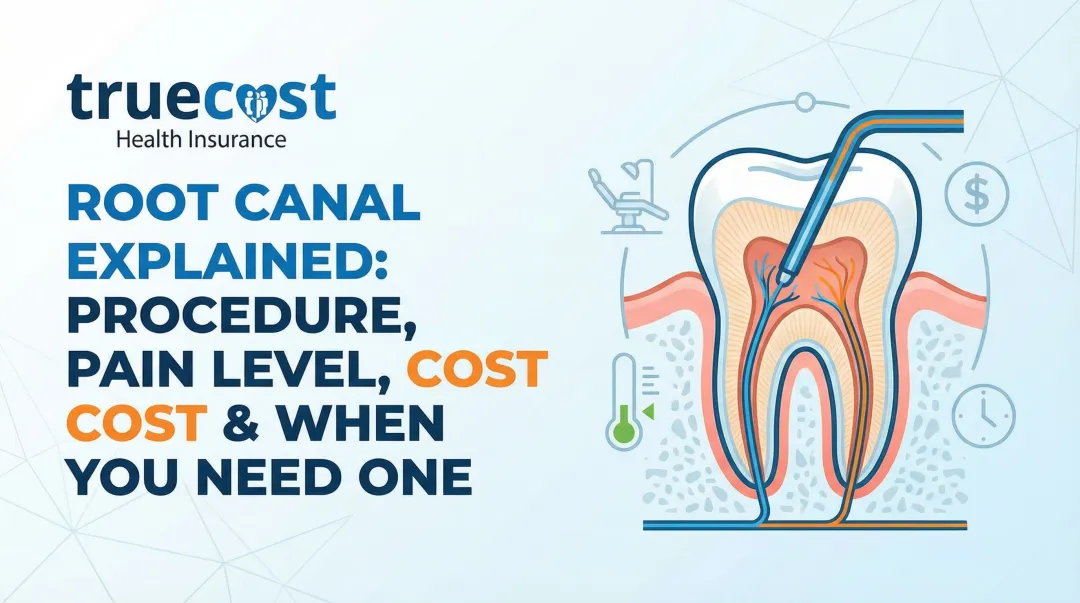
A root canal treats a deep infection inside your tooth pulp to prevent the need for a total extraction. Delaying this treatment only worsens the infection and leads to much higher costs for dental implants or complex bridges.
People search for coverage details because a single root canal can cost over one thousand dollars without any insurance help. Understanding your specific plan structure is the best way to manage these high medical expenses for your family.
You should understand how different insurance types handle these claims to ensure you receive the most financial assistance possible.
Are you worried that a root canal or crown could cost thousands because your insurance may not help enough? TrueCost Group helps you find PPO dental plans where preventive exams, cleanings, and X-rays are 100% free, with coverage for root canals and major procedures. Get a free quote over text.
How Much Does a Root Canal Cost With and Without Insurance?
The cost of a root canal varies based on which tooth needs treatment and whether a crown is required afterward. Front teeth are easier to treat, while molars require more time and specialized tools, increasing total costs.
Without insurance, typical root canal costs range as follows:
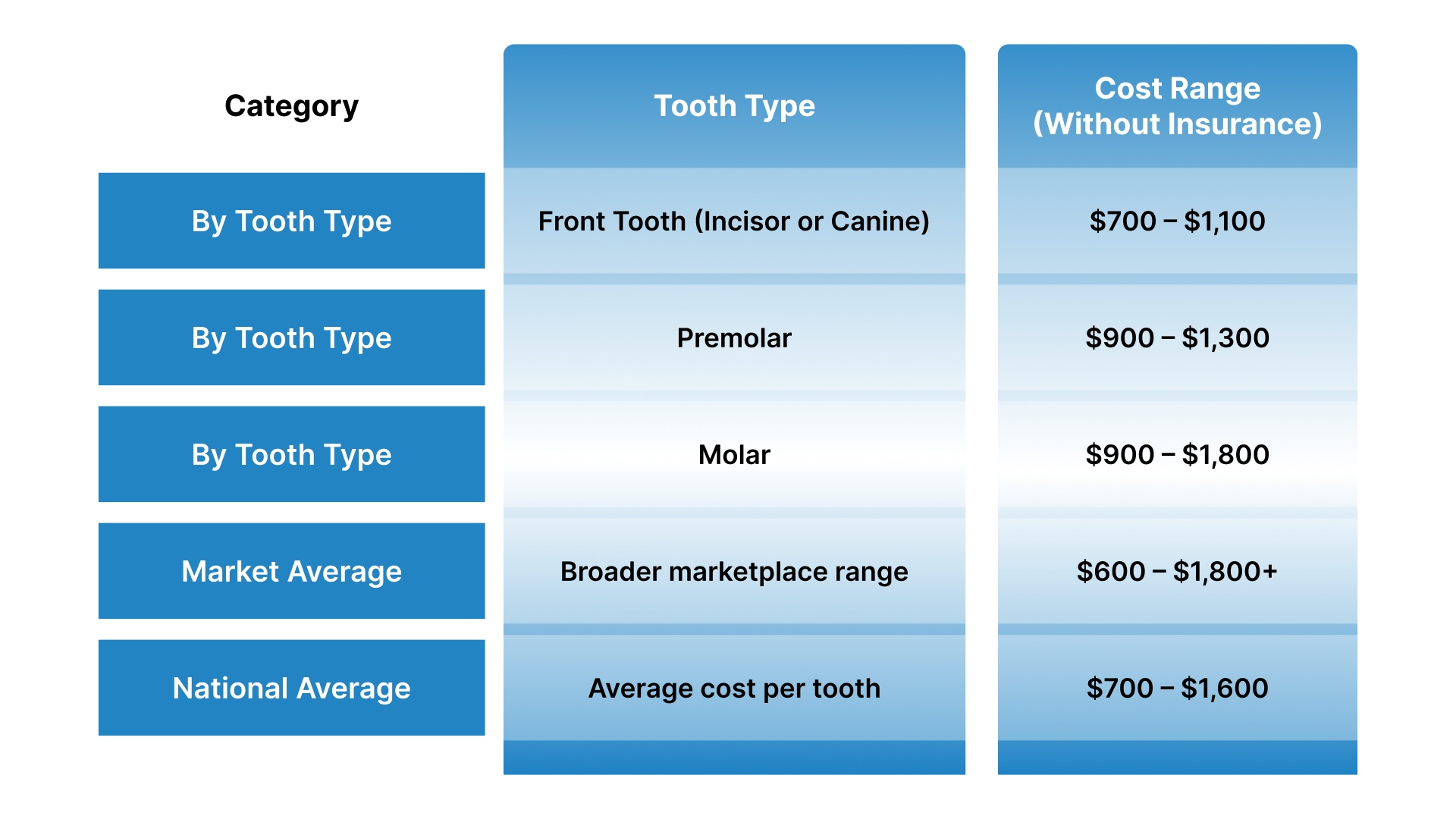
Front tooth (incisor or canine): $700–$1,100
Premolar: $900–$1,300
Molar: $900 – $1,800
Broader average ranges confirming root canal costs between about $600 and $1,800+ depending on marketplace average.
National averages also place root canal costs around $700–$1,600 per tooth.
With dental insurance, coverage usually applies separately to the root canal and the crown, meaning each service counts toward deductibles, coinsurance, and annual maximums.
Does Insurance Cover Root Canal?
Dental insurance usually covers root canals because they are medically necessary procedures required to maintain your overall oral health. The amount the insurance company pays depends entirely on the specific category and limits of your current active policy.
You can find the best coverage by reviewing your plan details or speaking with a licensed advisor today:
Depends on the Type of Insurance You Have
Dental insurance is the primary source of coverage for root canals because medical insurance rarely pays for tooth repairs. Your dental plan treats this procedure as a major service rather than a simple preventive visit or basic cleaning.
Most PPO plans offer the highest flexibility for these procedures while ensuring you can choose your favorite local dentist.
Knowing the difference between dental and medical policies helps you avoid common filing mistakes during your next dental visit.
Which Types of Insurance Can Cover a Root Canal
Most coverage for a root canal comes from a dedicated dental policy rather than your standard medical insurance plan. It is important to verify which type of insurance you are using to ensure the dental office bills correctly:
Dental Insurance Coverage for Root Canals
Dental plans categorize root canals as major procedures, which means the insurer shares the total cost with the patient. Typical coverage ranges between fifty and eighty percent after you have successfully met your annual plan deductible for the year.
The actual structure of your PPO plan matters much more than the name of the insurance company you choose.
Medical Insurance Coverage for Root Canals (Rare Cases)
Medical insurance might only pay for a root canal if the tooth damage was caused by a severe physical trauma. These cases often involve hospitalization or a spread of infection that threatens your overall physical health and bodily safety.
Routine dental work is almost always excluded from medical policies unless you have a specific and very rare rider.
Understanding how insurers categorize these services is the first step in calculating your expected out-of-pocket dental care costs.
How Root Canal Coverage Works Step by Step
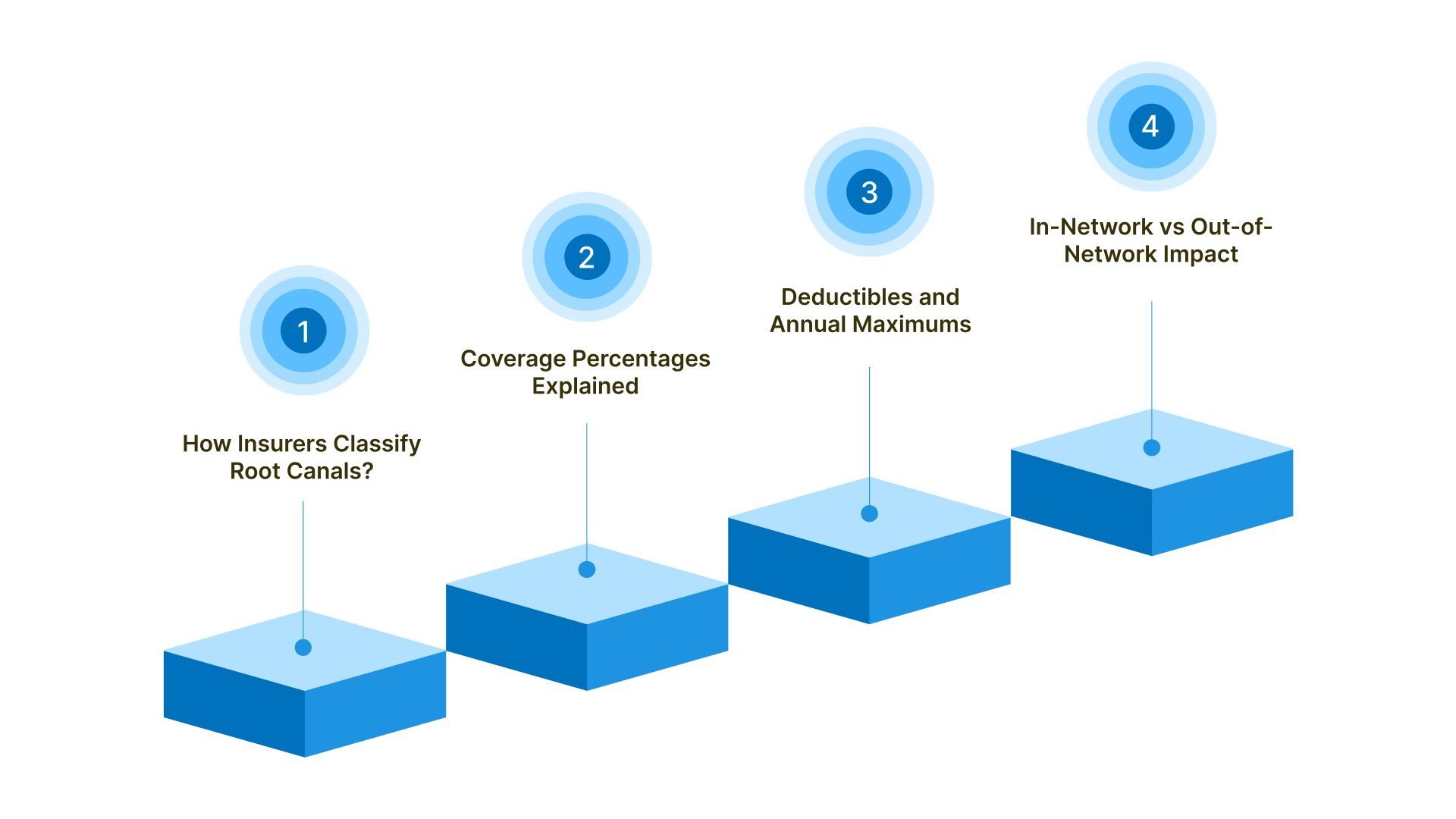
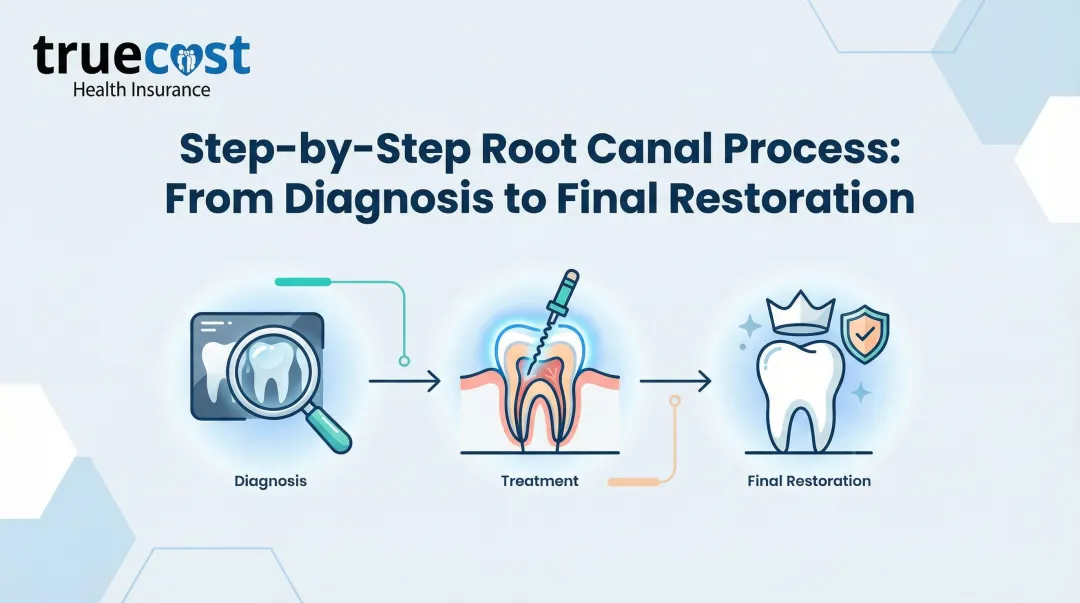
The process of paying for a root canal involves several technical steps that determine your final financial responsibility. You can follow this simple breakdown to see exactly how your insurance company calculates the benefit for this procedure:
Step 1: How Insurers Classify Root Canals
Insurers place root canals into the major procedure category because they require specialized tools and more clinical time.
This classification means the insurance company pays a lower percentage compared to basic fillings or routine preventive cleanings.
Step 2: Coverage Percentages Explained
You can expect your plan to pay roughly half to eighty percent of the negotiated rate for the procedure.
Coinsurance means you pay your small percentage of the bill while the insurance company pays the much larger remainder.
Step 3: Deductibles and Annual Maximums
You must pay your annual deductible first before the insurance company begins to share the cost of the treatment.
Every dollar spent counts toward your annual maximum, which caps the total amount the insurer will pay each year.
Step 4: In-Network vs Out-of-Network Impact
In-network dentists agree to lower rates, which immediately reduces the total amount you are required to pay the office.
Staying in the network prevents balance billing, where an out-of-network dentist charges you more than the insurance-allowed amount.
Real Cost Example: Root Canal With PPO Dental Insurance
A molar root canal is billed at $1,400, with a required crown costing $1,200.
Negotiated PPO rate reduces total cost to $2,000
Insurance covers 60% after deductible
Insurance pays $1,200
Patient pays approximately $800 out of pocket
Without insurance, the same treatment could exceed $2,600, making PPO coverage critical for major dental work.
Avoiding common claim denials will help you keep these costs as low as possible for your next appointment.
When Insurance Does Not Pay for a Root Canal
Insurance denials usually happen due to plan limits or missing requirements, not because root canals are considered cosmetic. Understanding these rules before treatment prevents unexpected bills.
Coverage Limits That Apply Before Treatment
Waiting periods that delay major procedure coverage for six to twelve months
Annual maximums that cap how much insurance pays per year
Plan exclusions on major services in low-cost policies
Administrative Reasons Claims Get Denied After Treatment
Missing or outdated X-rays
Incorrect CDT procedure codes
Incomplete clinical notes submitted by the dental office
How to Avoid These Issues
Request a pre-treatment estimate before scheduling
Confirm in-network dentist participation
Review plan limits with a licensed advisor before treatment
Have you ever feared your root canal claim might get denied due to waiting periods or coverage limits? TrueCost Group helps you enrol in PPO dental plans designed to reduce denials with clear benefits for fillings, crowns, root canals, and gum surgeries. Get a free quote over text to explore nationwide PPO access.
How to Check If Your Root Canal Will Be Covered Before Treatment
A pre-treatment estimate is the most reliable way to prevent surprise root canal bills. This step confirms coverage percentages, waiting periods, and remaining annual benefits before any work begins.
Requesting a Pre-Treatment Estimate
Your dentist can submit a pre-treatment estimate to the insurance company to see exactly what they will pay.
This process usually takes a few weeks but provides a written guarantee of your expected out-of-pocket dental costs.
Questions to Ask Before Scheduling
Ask the dental office for the exact coverage percentage for major services under your specific PPO dental plan.
Confirm that your dentist is currently an active member of the insurance network to ensure you get discounts.
Careful planning is the best way to handle dental emergencies without causing a major financial crisis for your family.
The TrueCost Solution for Your Dental Care
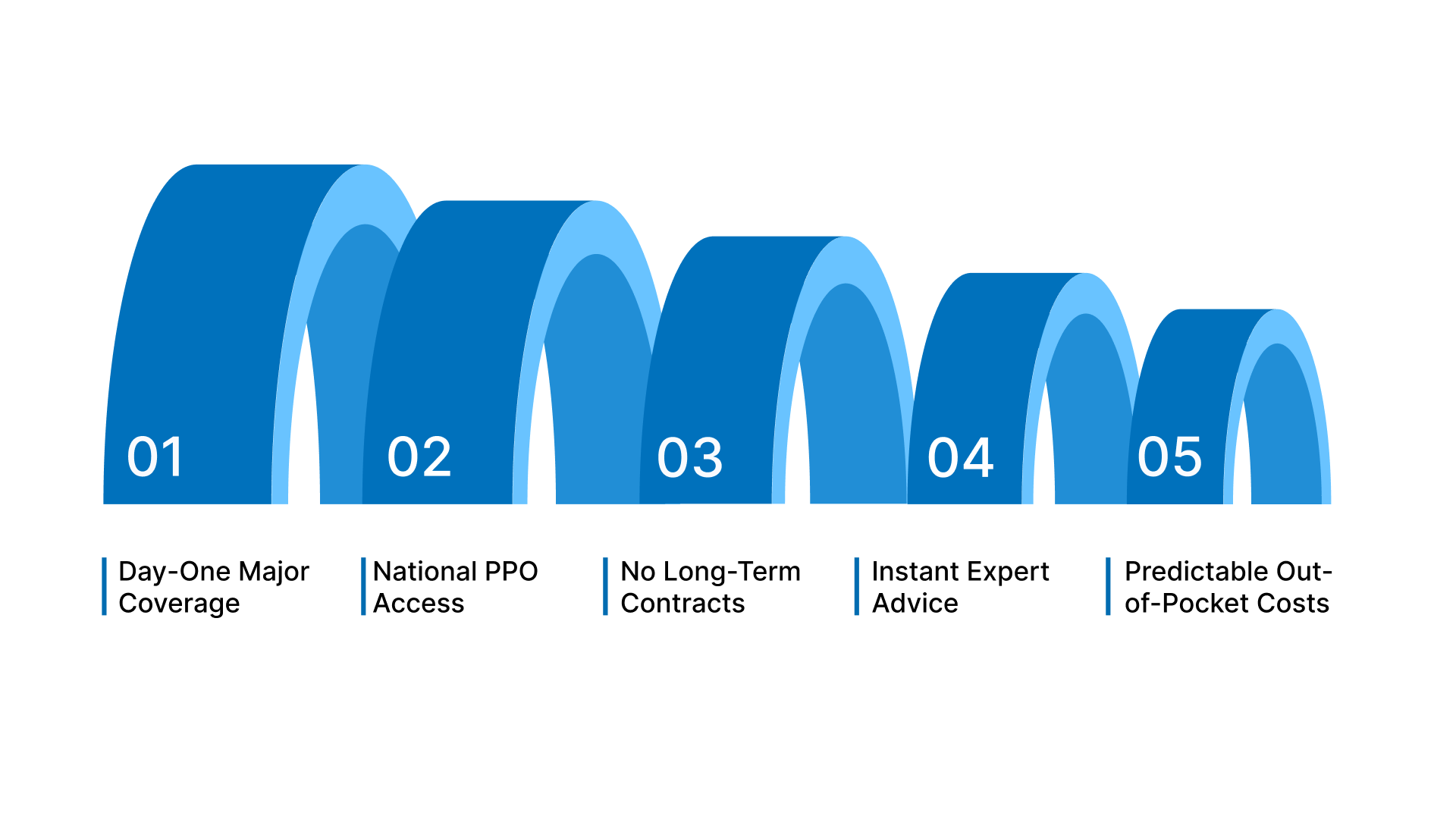
Managing the cost of a root canal can feel overwhelming when you are working within a tight household budget. You may feel confused by insurance terms or worry that low-cost plans hide restrictions. Many families stay uninsured because enrollment feels slow and unclear.
TrueCost Group removes these barriers by helping you access PPO dental plans with immediate benefits. You receive clear, advisor-guided support through simple messaging so you feel protected before your next dental visit.
Day-One Major Coverage: You can skip the six-month waiting period and get immediate help for root canals and crowns.
National PPO Access: You choose from over eighty-five thousand dentists who offer discounted rates to lower your final bill.
No Long-Term Contracts: You enjoy month-to-month flexibility that allows you to manage your healthcare costs on your own terms.
Instant Expert Advice: You can speak with a real advisor through WhatsApp or Messenger to get your questions answered quickly.
Predictable Out-of-Pocket Costs: You receive a clear explanation of your coinsurance and deductibles, so there are no billing surprises.
You can finally stop worrying about the high cost of a healthy smile by choosing a plan designed for life.
Conclusion
A root canal is a significant investment in your health that requires clear insurance coverage to remain affordable for you. This guide has explained how dental plans classify major procedures and how you can use PPO networks to save.
By checking your waiting periods and annual maximums, you can avoid common claim denials and protect your family budget.
TrueCost Group specializes in helping you find affordable dental insurance that provides immediate protection for major dental work today. We understand that dental pain cannot wait, and we offer plans that start working for you from day one.
Our goal is to make quality dental care accessible and simple for everyone who needs a healthy, pain-free smile.
Get your free quote over text today to see how much you can save on your next dental procedure.
FAQs
Q. Does Insurance Cover Root Canals Immediately?
Most standard plans have a waiting period of six months or more before they will pay for major procedures. However, TrueCost Group connects you with specialized PPO plans that provide immediate coverage for root canals starting on your first day.
Q. Is a Root Canal Considered Medical or Dental?
A root canal is almost always considered a dental procedure and is covered under your dental insurance policy limits. Medical insurance will only cover a root canal in rare cases of severe physical trauma or life-threatening facial infections.
Q. Does Insurance Cover the Crown After a Root Canal?
Most dental plans cover the protective crown as a major procedure because it is necessary to strengthen the tooth. You should check your plan to see if the crown has a separate coinsurance percentage from the root canal.
Q. Can Insurance Deny a Root Canal as Cosmetic?
Insurance companies rarely deny root canals as cosmetic because they are used to treat infection and save a natural tooth. A denial is usually related to a waiting period or a plan exclusion rather than the procedure being cosmetic.
Q. What Happens If You Delay Treatment?
Delaying a root canal allows the infection to spread, which can lead to extreme pain and total tooth loss. This delay often results in much more expensive procedures like dental implants or complex oral surgeries in the future.