Introduction
Wisdom teeth removal recovery takes most people one to two weeks, with the first few days being the most critical. What causes unnecessary anxiety is not knowing what's normal—swelling that peaks on day three, blood-tinged saliva that lingers for 24 hours, jaw stiffness that makes opening your mouth difficult—versus what signals a real problem.
Approximately 10 million wisdom teeth are extracted annually from roughly 5 million Americans, making it one of the most common oral surgeries in the U.S. Despite its frequency, the day-by-day experience catches many people off guard.
This article breaks down what to expect each day of your recovery, what foods you can eat and when, what activities to avoid, and when specific symptoms warrant a call to your dentist.
Key Takeaways
- Full recovery takes one to two weeks, with most people returning to work or school within three to five days
- Swelling and pain peak around days two to three before improving
- Soft foods, no straws, and no vigorous activity are essential during the first few days
- Dry socket is the most common complication and is largely preventable with proper care
- Watch for sudden worsening pain after day four — it signals a potential complication
What to Expect Overall During Recovery
Recovery follows a predictable arc. Expect initial bleeding and swelling in the first 24 hours, peak discomfort around days two to three, noticeable improvement by days five to seven, and near-complete soft tissue healing by week two.
However, individual recovery varies based on:
- How many teeth were removed
- Whether teeth were impacted (about 90% of people have at least one impacted wisdom tooth)
- Your age (younger patients under 25 typically heal faster)
- How closely you follow post-operative instructions
Keep these variables in mind as you read through the day-by-day breakdown — your experience may land anywhere within this range.
Day-by-Day Wisdom Teeth Recovery Timeline
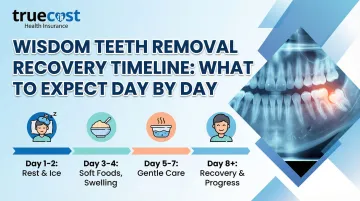
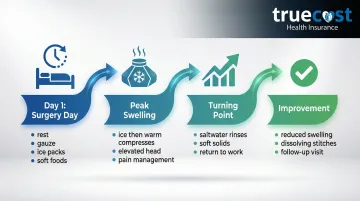
Day 1 — Surgery Day
Immediately after surgery, you'll feel groggy from anesthesia. Gauze will be in place over the extraction sockets, and moderate bleeding and oozing are normal for the first few hours. Begin the ice pack protocol right away: 20 minutes on, 20 minutes off.
Day one priorities:
- Rest completely—no work, no errands, no activity
- Leave gauze in place for the recommended time (typically 30-45 minutes)
- Take prescribed pain medications on schedule, before discomfort peaks
- Eat only soft, cool foods (nothing hot or hard)
- Do not rinse or spit forcefully—this can dislodge the forming blood clot
Days 2–3 — Peak Swelling and Discomfort
Days two and three are typically when swelling, jaw stiffness, and pain reach their highest point. Swelling typically peaks at 48 hours post-surgery. Bruising may also appear on your jaw or cheeks during this window.
How to manage this phase:
- Continue ice packs for the first 48 hours
- After 48 hours, switch to warm compresses to reduce lingering swelling
- Stay ahead of pain—take medication before it becomes severe
- Keep your head elevated, even during sleep (use 2-3 pillows)
Days 4–5 — The Turning Point
Most people notice a real shift during this phase. Swelling begins to subside, pain becomes manageable with over-the-counter medications, and energy returns enough to go back to work or school.
Rinse and eating tips for Days 4–5:
- Start gentle salt water rinses if your surgeon recommends them: ½ tsp salt in 8 oz warm water, 2-3 times daily after meals
- Tilt your head to let the rinse soak the socket — don't swish forcefully
- Soft foods are still required; avoid anything that requires real chewing
Days 6–7 — Noticeable Improvement
By the end of the first week, swelling is significantly reduced, your jaw opens more freely, and energy returns to near-normal levels. Stitches, if placed, may begin to dissolve or may be removed at a follow-up visit around this time.
The extraction sites are still healing internally, even when they feel fine on the surface. A few things to keep in mind:
- Avoid hard, crunchy, or chewy foods — the tissue is fragile despite feeling better
- Attend your follow-up appointment if scheduled; your dentist will confirm healing progress
- Continue salt water rinses after meals until cleared to stop
Week 2 — Near-Complete Recovery
The second week marks the final phase of active recovery. Soft tissue over the socket continues closing, residual tenderness fades, and most people can gradually return to their normal diet and light exercise.
Complete bone healing of the socket takes several months, but this process is painless and requires no action on your part. If you're still experiencing significant pain, swelling, or a foul taste entering Week 2, contact your dentist — these can be signs of dry socket or infection that need prompt attention.
What to Eat and When During Recovery
First 3-5 Days: Strictly Soft Foods
Your diet should consist of foods that require no chewing and put zero pressure near the extraction sites:
- Yogurt
- Mashed potatoes
- Scrambled eggs
- Applesauce
- Smoothies (no straw — sip directly from a cup)
- Soup (lukewarm, not hot)
- Cottage cheese
- Pureed fruits
What to Avoid and Why
Avoid straws for at least one week — the sucking action creates negative pressure that can dislodge the blood clot, leading to dry socket.
Other foods to avoid:
- Hard or crunchy foods (seeds, chips, nuts can lodge in the socket)
- Hot beverages (increases bleeding risk)
- Alcohol or carbonated drinks for at least five days
- Spicy food that can irritate healing tissue
Days 5-7: Gradual Reintroduction
Once swelling has reduced and the extraction sites feel less tender, you can begin reintroducing soft solids — typically around day five to seven:
- Pasta
- Soft bread
- Cooked vegetables
- Soft fish
Return to a full diet only when chewing doesn't cause pain or pressure. If a food requires significant jaw force or leaves you sore afterward, give it another day or two.
Red Flags: When Recovery Isn't Going as Planned
Dry Socket
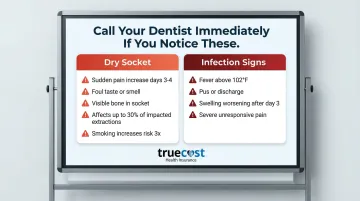
Dry socket occurs when the protective blood clot is dislodged or fails to form, exposing the bone underneath. It affects approximately 1-5% of routine extractions but up to 30% of impacted third molar surgeries.
Recognizable by:
- Sudden, sharp increase in pain starting around day three or four
- Foul taste or smell in your mouth
- Visible bone in the socket
Dry socket requires a dentist visit and cannot be self-treated. Smoking increases the odds of developing dry socket by more than 3-fold.
Signs of Infection
Contact your oral surgeon immediately if you experience:
- Fever above 102°F
- Pus or discharge from the surgical site
- Increasing swelling after day three
- Severe pain unresponsive to medication
Normal vs. Warning Signs
Normal:
- Mild oozing for the first 24 hours
- Slight jaw stiffness
- Bruising on the jaw or cheeks
Not Normal:
- Bright red heavy bleeding that doesn't slow with gauze pressure
- Difficulty swallowing or breathing — call 911 immediately
- Persistent numbness beyond the first day
Quick guide: If pain, swelling, or bleeding gets worse after day four rather than better, call your dentist the same day.
How to Support Your Recovery at Home
Core Home Care Behaviors
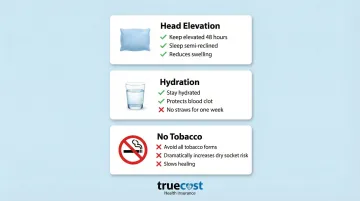
- Keep your head elevated for the first 48 hours — sleeping semi-reclined reduces swelling and speeds tissue recovery
- Stay hydrated but skip straws for at least one week to protect the clot
- Avoid all tobacco in any form; smoking dramatically increases dry socket risk and slows healing
Oral Hygiene During Recovery
Brush gently around (not directly on) the extraction sites from day one. Rinse as directed starting day two or three. Avoid alcohol-based mouthwash, which can irritate the wound.
Neglecting oral hygiene during recovery increases infection risk.
What to Know If You're Paying Out of Pocket
Recovery is straightforward for most people — but if complications arise, or if you're planning ahead for future dental procedures, cost is a real consideration. Without insurance, wisdom teeth removal ranges from $200 to $700 for simple extractions and $250 to $1,100 for impacted teeth.
What many uninsured patients don't realize: roughly 46% of uninsured Americans qualify for a $0/month ACA marketplace plan. Some of those plans include coverage for medically necessary oral surgery.
TrueCost Group is a licensed health insurance brokerage that helps Americans find ACA marketplace and Medicare Advantage coverage — including plans that cover surgical procedures. Their advisors can check your eligibility at no obligation. Reach them at 1-888-788-8285 or info@truecostgroup.com.
Frequently Asked Questions
How many days should you rest after wisdom teeth extraction?
Most people need three to five days of rest at home. Those with physically demanding jobs or complex extractions (such as impacted teeth) may need additional days before returning to work.
What should you not do after wisdom teeth removal?
Avoid straws, smoking, vigorous exercise, hard or crunchy foods, alcohol, and aggressive rinsing or spitting. All of these can dislodge the blood clot and slow healing.
Is day 3 the worst day of wisdom teeth removal recovery?
Days two through three are typically when swelling and pain peak, but this varies by individual and complexity of extraction. Noticeable improvement usually begins by day four or five.
What to eat on day 5 after wisdom teeth removal?
By day five, most people can begin introducing soft solids like pasta, soft bread, or cooked vegetables. Continue to avoid anything crunchy, chewy, or requiring significant bite pressure.
How do I know if I have a dry socket?
Dry socket presents as sudden, worsening pain around days three to four (after initial improvement), sometimes with a bad taste or odor. It requires a dentist visit rather than home treatment.
When can I return to normal activity after wisdom teeth removal?
Light activity can resume around days three to five. Strenuous exercise, heavy lifting, and contact sports should wait at least a week—or until your oral surgeon clears you—since elevated heart rate increases bleeding and swelling risk.