You probably worry about the high cost of dental work every time you feel a slight toothache develop. A single crown or root canal can easily cost you over a thousand dollars when you pay out of pocket.
Many people skip the dentist because they fear getting a massive bill that they simply cannot afford right now. You deserve a way to protect your teeth and your wallet without dealing with confusing medical jargon or hidden fees
Finding the right dental plan allows you to visit a quality dentist while the insurance company pays a portion of the bill. PPO dental plans, also called DPPO plans, continue to lead the market, reflecting strong consumer trust.
In this guide, you will learn the PPO dental meaning and discover how these flexible plans work for your family.
Quick Look
Total Flexibility: You can choose any dentist you want, though visiting in-network providers saves you the most money.
Immediate Care: Many PPO plans offered through TrueCost Group feature day-one benefits with absolutely no waiting periods.
Preventive Focus: Routine cleanings and exams are usually covered at one hundred percent to stop problems before they start.
High Value: You get access to a national network of over eighty-five thousand dentists with predictable costs and strong coverage for both routine and major care.
No Long-Term Risk: These plans typically operate on a month-to-month basis with no restrictive long-term contracts or commitments.
What Does PPO Dental Mean?
A PPO, or Preferred Provider Organization, is a dental plan that gives you the freedom to choose your dentist. The insurance company builds a network of "preferred" doctors who agree to charge you much lower, pre-negotiated rates.
You can still visit an out-of-network dentist, but your savings are highest when you stay within the network.
For example, a routine dental cleaning costs around $180 without insurance. With a PPO dental plan, preventive services like cleanings, exams, and X-rays are often covered at 100%, so you pay $0 when visiting an in-network dentist.
If you later need a root canal costing $1,200, the PPO’s negotiated rate may reduce it to $800. With 70% coverage, the insurance pays $560, leaving you to pay about $240 out of pocket.
This cost-sharing structure helps you manage both routine care and unexpected dental expenses.
What PPO Dental Is Not
A PPO is not an HMO, which restricts you to a tiny list of specific clinics and requires referrals. It is also not a simple discount plan, as those only offer small price cuts rather than actual insurance. You are getting real coverage that pays a large percentage of your bills directly to the dental office.
You should understand the mechanics of these plans to ensure you get the maximum value from your monthly premium.
Do you still feel unsure whether PPO dental plans actually save money or just sound flexible on paper? TrueCost Group helps you understand which PPO dental plans truly offer value based on your income and dental needs. You can get a free quote over text and see real plan options without phone pressure or confusing paperwork with no waiting periods.
How PPO Dental Insurance Works: 4 Simple Steps
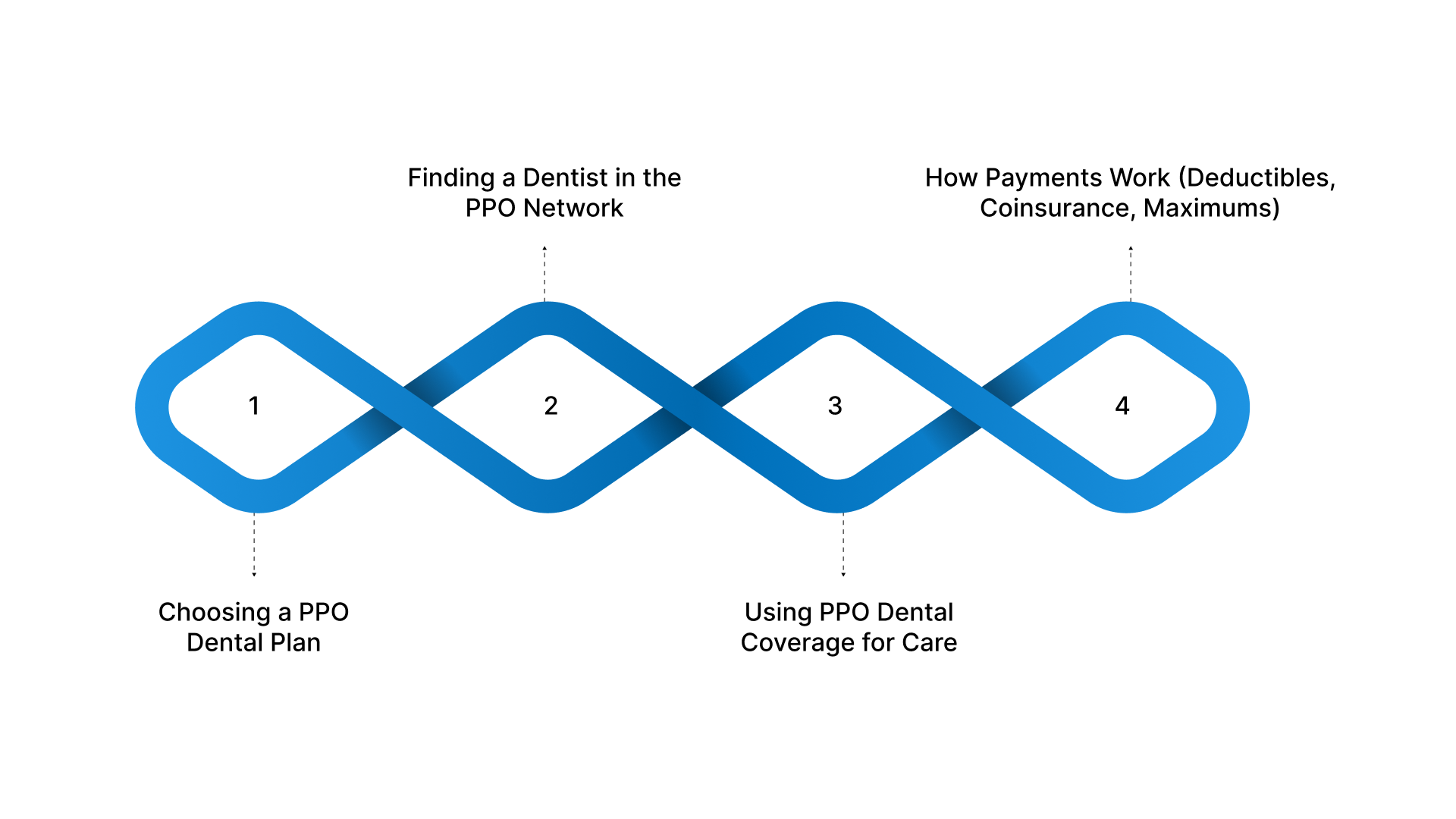
PPO dental insurance functions by sharing the cost of your dental care between you and the insurance provider. You pay a small monthly fee to maintain your coverage and gain access to significantly reduced dental service rates.
The process involves a few simple steps that ensure you receive professional care without any sudden financial surprises:
Step 1 – Choosing a PPO Dental Plan
Compare monthly premiums to find a price point that fits into your current household budget.
Check the annual maximum to see the total amount the insurance will pay for your care each year.
Review the list of covered benefits to ensure major procedures like crowns or dentures are included.
Step 2 – Finding a Dentist in the PPO Network
Search the national provider database to see if your favorite local dentist is already in the network.
Confirm that the dental office accepts your specific PPO plan before you schedule your first official appointment.
Enjoy the convenience of nationwide coverage that protects you even if you move or travel across state lines.
Step 3 – Using PPO Dental Coverage for Care
Schedule your two annual cleanings and exams, which are usually fully covered by your new PPO plan.
Use your benefits for basic needs like cavity fillings or simple tooth extractions whenever they become necessary.
Request coverage for major dental work, such as root canals or bridges, to avoid paying the full price.
Step 4 – How Payments Work (Deductibles, Coinsurance, Maximums)
Pay your small annual deductible first before the insurance company starts covering a percentage of your bills.
Understand that coinsurance is the portion of the bill you pay, such as twenty percent for a filling.
Track your annual maximum to plan your major dental treatments efficiently throughout the entire calendar year.
The specific services covered under your plan determine exactly how much you will save during your next visit.
What Does PPO Dental Cover?
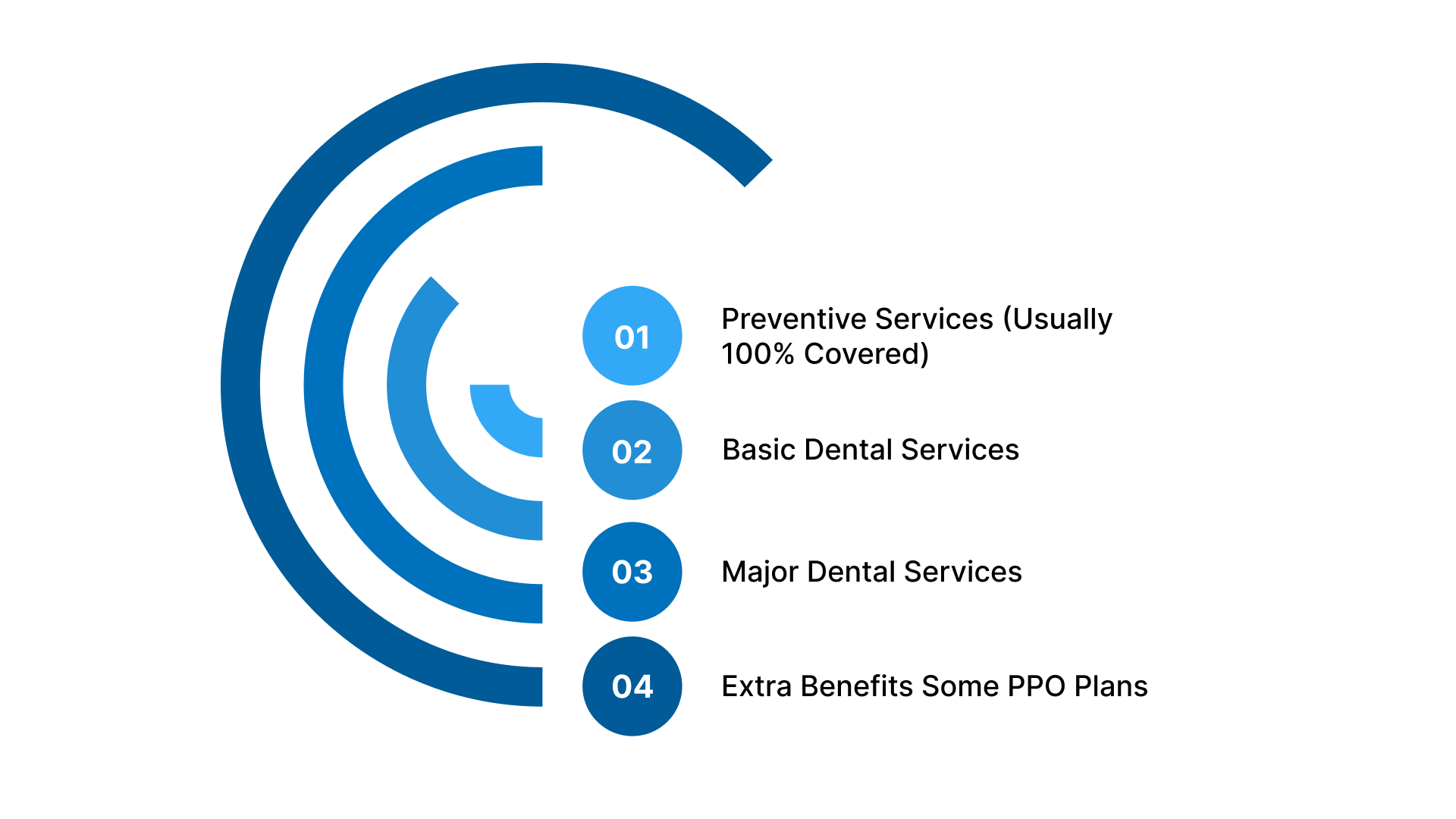
A PPO plan provides a structured tier of benefits designed to keep your mouth healthy and your costs low. Most plans categorize services into three main groups to help you understand exactly what the insurance company pays for.
You can maximize your benefits by knowing which category your specific dental procedure falls into before you arrive:
Preventive Services (Usually 100% Covered)
Preventive care helps you avoid expensive procedures by addressing issues early.
Cleanings: Regular cleanings remove plaque and reduce future dental problems.
Exams: Dentist exams detect issues before pain or complications appear.
X-rays: Imaging identifies hidden decay or structural problems early.
Financial impact: Preventive coverage reduces long-term dental spending significantly.
Basic Dental Services
Basic services address common dental problems that require treatment beyond routine care.
Fillings: Repair cavities before damage spreads deeper.
Simple extractions: Remove damaged or painful teeth safely.
Deep cleanings: Treat gum disease through scaling and root planing procedures.
Major Dental Services
Major services support advanced dental needs that often carry high costs.
Crowns: Restore damaged tooth structure and function.
Root canals: Treat infected teeth while preserving natural tooth structure.
Bridges and dentures: Replace missing teeth for comfort and function.
Gum surgeries: Address advanced periodontal disease when necessary.
Extra Benefits Some PPO Plans Include:
Additional benefits increase overall value for individuals and families.
Vision credits: Help offset eye exam or eyewear costs.
Hearing benefits: Support hearing exams or hearing aid expenses.
Dental emergencies: Cover accidental injuries requiring urgent dental care.
Family value: Extras reduce overall healthcare costs beyond dental needs.
Knowing the cost of these services helps you decide if a PPO plan fits your personal financial goals.
How Much Does PPO Dental Insurance Cost?
You can typically find PPO dental plans for less than one dollar per day, making them a strong value option when you need coverage beyond basic cleanings. Monthly premiums usually range from zero to fifty dollars for individuals, depending on the level of coverage you choose.
While you might pay a small deductible, the massive discounts on major procedures far outweigh the monthly cost. This pricing structure helps families balance monthly costs with meaningful protection for higher-cost dental procedures.
Choosing the right plan depends on your specific health needs and how often you plan to visit.
PPO vs HMO vs Discount Dental Plans: Which One Fits Your Needs?
Choosing the right dental plan becomes easier when you compare how each option handles costs, dentist choice, and coverage limits. Understanding these differences helps you avoid enrolling in a plan that does not match your dental needs.
PPO Dental Plans
PPO plans offer flexibility and broader coverage for both routine and major dental care. You can visit any licensed dentist, with the highest savings available when staying in-network.
You can choose your own dentist without referrals
Preventive care is often covered at one hundred percent
Major services like crowns and root canals are partially covered
Nationwide PPO networks reduce out-of-pocket costs
Month-to-month options are commonly available
Best for: Families, people needing major dental work, or anyone wanting dentist freedom.
HMO Dental Plans
HMO plans require you to select a primary dentist from a limited network. Referrals are usually required for specialists, and coverage is more restricted.
Lower monthly premiums
Very limited dentist choice
No out-of-network coverage
Many major procedures are excluded or capped
Appointments may involve longer wait times
Best for: Individuals with minimal dental needs who prioritize the lowest monthly cost.
Discount Dental Plans
Discount plans are not insurance and do not involve claims or insurer payments. They provide reduced cash prices for services at participating dentists.
No monthly insurance premiums
No waiting periods
No coverage percentages or payouts
You pay the dentist directly at a discounted rate
No protection against high-cost procedures
Best for: People needing one specific procedure or those who cannot qualify for insurance.
For example, you need a routine cleaning and later require a crown during the same year. Without any plan, a cleaning costs about $180, and a crown costs around $1,400, totaling $1,580.
With a PPO dental plan, cleanings are often covered at 100%, so you pay $0 for preventive care. The crown’s negotiated rate may drop to $1,000, with insurance covering 60%, leaving you to pay about $400 out of pocket.
With an HMO dental plan, the cleaning may still cost $0, but the crown could be capped or excluded. If covered, you may pay a flat fee of around $600 to $800, with no option to use an out-of-network dentist.
With a discount dental plan, the cleaning might be reduced to $120, and the crown discounted to about $1,050. You pay the full amount directly, totaling roughly $1,170, with no insurance payment.
Quick Comparision
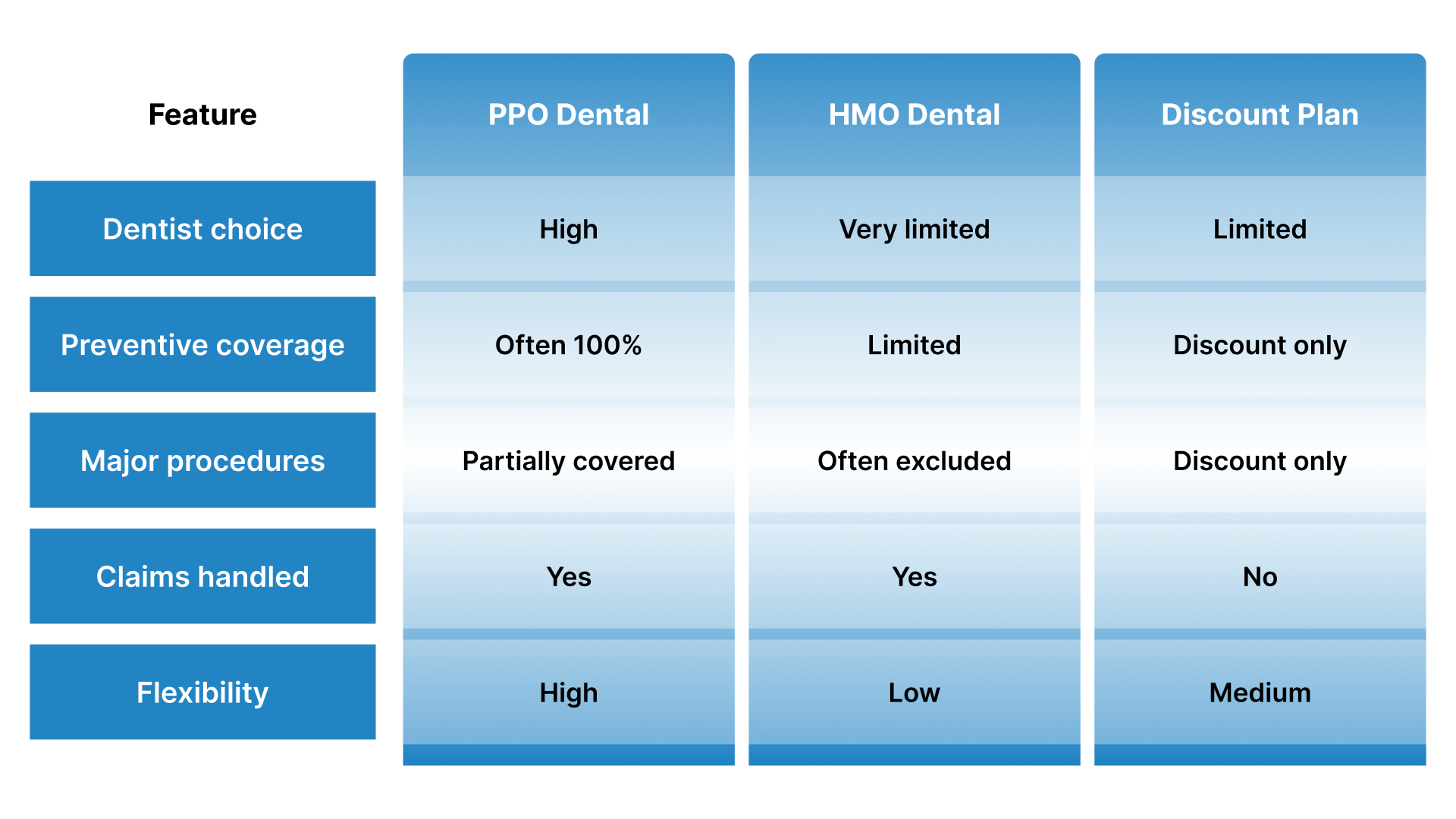
Feature | PPO Dental | HMO Dental | Discount Plan |
Dentist choice | High | Very limited | Limited |
Preventive coverage | Often 100% | Limited | Discount only |
Major procedures | Partially covered | Often excluded | Discount only |
Claims handled | Yes | Yes | No |
Flexibility | High | Low | Medium |
If you want coverage that helps with cleanings, fillings, crowns, and unexpected dental costs, PPO plans usually offer the best balance between flexibility, coverage depth, and long-term value. HMO and discount plans may appear cheaper upfront, but often lead to higher expenses when major dental work is needed.
Who Should Choose a PPO Dental Plan?
PPO plans are ideal for people who value choice and need comprehensive coverage for more than just cleanings. These plans offer the most flexibility in the insurance market, allowing you to see almost any dentist in America.
You should consider your lifestyle and dental history to determine if this type of plan matches your expectations:
PPO Dental Is Best For You If
This plan type works perfectly for people who want high-quality care without being forced into specific dental clinics.
Dentist Flexibility: You want the freedom to keep your current dentist or choose a new one nearby.
Complex Needs: You know that you likely need fillings, crowns, or other major work in the future.
No Referrals: You prefer to book appointments directly with specialists without seeing a primary dentist first.
When PPO Dental May Not Be the Best Fit
While PPO plans are excellent, they might not be the right choice for every single person or budget.
Very Limited Needs: You only go to the dentist once every few years for a quick checkup.
Ultra-Low Budget: You are only looking for the absolute cheapest plan available, regardless of the actual coverage.
Temporary Coverage: You only need insurance for one single month, and do not plan to maintain your health.
Avoiding common pitfalls will help you get the most out of whichever dental plan you finally select.
Are you wondering if a PPO dental plan fits your situation or if another option would cost you less? TrueCost Group works with individuals and families to match them with PPO dental plans that offer the right balance of cost, coverage, and flexibility. Get a free quote over text and review your options with a real advisor guiding you step by step.
Common Mistakes People Make with PPO Dental Plans
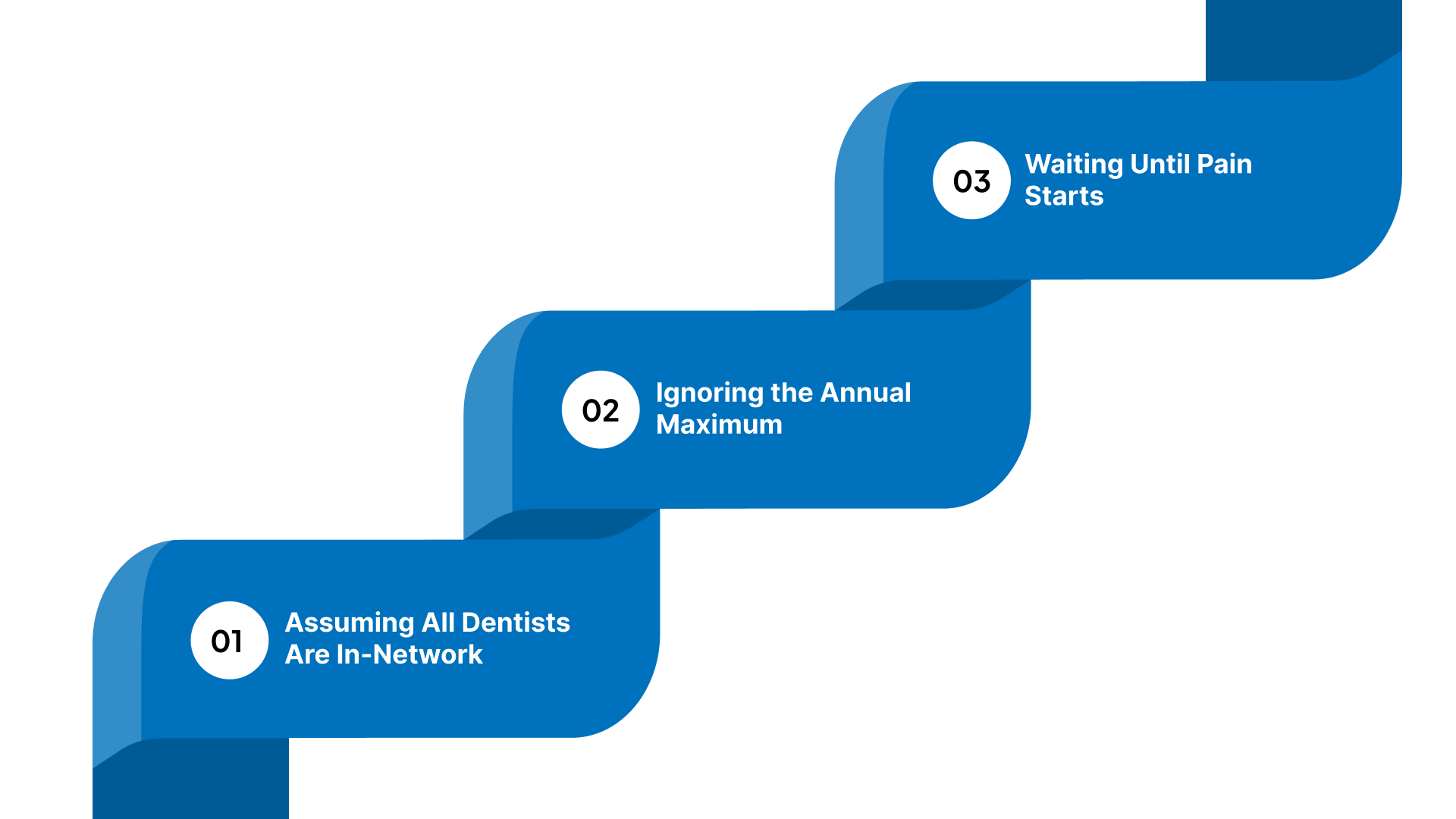
Many people miss out on savings because they do not fully understand how to navigate their insurance policy rules. Learning from these common errors will ensure that you use your benefits effectively and avoid any unexpected dental bills.
You can save thousands of dollars over your lifetime by simply being a more informed and proactive consumer:
Assuming All Dentists Are In-Network
Just because a dentist says they "accept" your insurance does not mean they are actually in your network.
The Problem: Out-of-network dentists can charge you more than the insurance company's pre-negotiated "preferred" rates.
The Solution: Always use the official insurance provider portal to verify the network status of your dentist.
Ignoring the Annual Maximum
The annual maximum is the most money your insurance will pay for your dental care during one year.
The Problem: If you exceed this limit on major work, you must pay the remaining balance yourself.
The Solution: Work with your dentist to schedule expensive procedures across two different calendar years when possible.
Waiting Until Pain Starts
Many people wait until they have a toothache to look for insurance, which can lead to higher costs.
The Problem: Dental issues get much more expensive and harder to treat the longer you wait to fix them.
The Solution: Enroll in a plan early so you can use preventive care to catch small problems before they hurt.
Following a simple checklist will help you identify the perfect plan for your specific dental care needs.
How to Choose the Right PPO Dental Plan
Selecting a plan does not have to be a stressful experience if you know exactly what to look for. Use this checklist to compare different options and find the one that offers the best value for you.
These steps will guide you toward a plan that provides immediate peace of mind and long-term savings:
Confirm that your preferred local dentist is an active participant in the plan's specific provider network.
Review the annual maximum to ensure it is high enough to cover your expected major dental procedures.
Check for waiting periods to make sure you can use your benefits as soon as you need them.
Look for extra perks like vision or hearing credits that can add more value to your family plan.
Questions to Ask Before Enrolling
"Are my dental benefits active immediately on the first day of the month after I sign up?"
"Is there a waiting period for major services like crowns, root canals, or new sets of dentures?"
"What is the maximum amount the insurance company will pay for my dental care every single year?"
"Can I cancel my coverage at any time if my financial situation or dental needs change?"
Understanding your options is the first step toward achieving a healthier smile and a more stable financial future.
The TrueCost Solution for Your Dental Care
Finding quality dental coverage can feel overwhelming when you are managing a tight household budget. You may feel discouraged by unclear insurance terms or worry that affordable plans come with limitations.
TrueCost Group helps you access PPO dental plans designed for affordability, clarity, and immediate preventive benefits. We have a National PPO network (85,000+ dentists). You also receive advisor-guided support through simple messaging, so you understand your coverage before visiting a dentist.
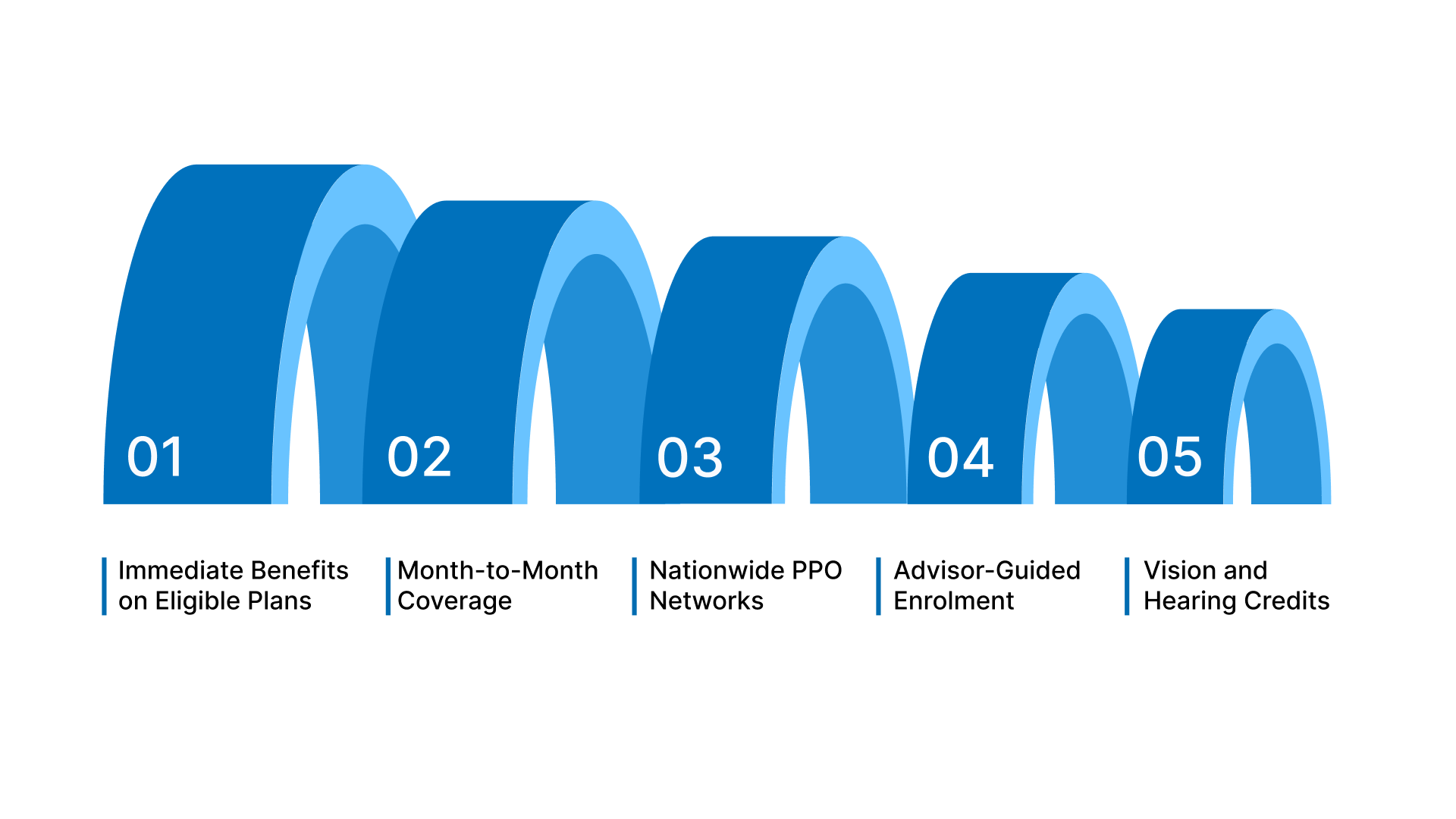
Immediate Benefits on Eligible Plans: Many PPO dental plans offer preventive coverage from day one without extended waiting periods.
Month-to-Month Coverage: Plans do not require long-term contracts, giving you flexibility as your needs change.
Nationwide PPO Networks: You can choose from over eighty-five thousand dentists with pre-negotiated rates.
Advisor-Guided Enrolment: You connect with a live agent through a call for step-by-step help.
Vision and Hearing Credits: Some plans include added benefits that support overall family care costs.
You can finally stop worrying about the high cost of a healthy smile by choosing a plan designed for real life.
Conclusion
PPO dental plans offer flexibility, immediate preventive care, and meaningful cost protection for routine and major treatments. You benefit from dentist choice, predictable expenses, and coverage that supports long-term oral health planning.
If you want help comparing PPO dental options without confusion or pressure, TrueCost Group provides guided enrollment support. You receive plan explanations, cost clarity, and eligibility help designed for individuals and families seeking affordable coverage.
Get your free quote over text today to see how much you can save on dental care.
FAQs
Q. Is PPO Dental Real Insurance?
Yes, a PPO dental plan is real insurance that pays a portion of your dental bills to the office. It is not a discount card, and it provides specific, legally binding benefits for preventive, basic, and major care.
Q. Can I Use PPO Dental Anywhere?
You can use a PPO plan at almost any dental office in the country, regardless of its network status. However, you will always save the most money by choosing a dentist who is part of the preferred network.
Q. Does PPO Dental Cover Braces or Orthodontics?
Some PPO plans include orthodontic coverage, but you must check the specific details of your plan before you enroll. Many plans focused on affordability prioritize general dental health services like cleanings, fillings, and crowns over cosmetic braces.
Q. Is PPO Dental Better Than Paying Cash?
A PPO plan is almost always better than paying cash because of the deeply discounted rates for network providers. You pay much less for the same service because the insurance company has already negotiated lower prices for you.
Q. How Fast Can PPO Dental Coverage Start?
Many PPO plans can start as early as the first day of the following month after you finish enrollment. TrueCost Group specializes in finding plans that offer immediate benefits so you do not have to wait for care.