A crown can feel like a shock purchase because it’s custom to your mouth. It has to fit your bite, sit cleanly at the gumline, and seal the tooth. That means dentist time, lab work, and materials. The total can also jump if the tooth needs extra support before a crown can hold safely.
This guide explains why crowns cost so much, what’s typically included in a quote, and what usually gets added later. It also gives you a clear checklist to lower out-of-pocket costs and avoid surprises, especially if you’re trying to stay on a tight budget.
Key Takeaways
Crowns cost more because they combine custom lab work, dentist time, and materials.
Add-ons drive the biggest price jumps: build-up, root canal, gum work, extra imaging.
Material matters, but network and plan rules often matter more for your final bill.
Ask for an itemized estimate and a pre-treatment estimate before you book.
If cost is blocking care, check affordable dental coverage early.
What Makes A Crown Expensive In The First Place?
A crown costs more because you’re paying for the process, not just the final piece. The tooth has to be shaped to support the crown, measurements have to be captured with enough accuracy for a clean seal, and the final crown has to be checked for fit and bite before it’s cemented.
That workflow involves skilled hands and quality checks, because small errors can turn into sensitivity, bite discomfort, or a crown that doesn’t sit correctly.
Multiple Steps And Chair Time Add Up
Crowns usually need more time than a filling because the dentist has to:
Prepare the tooth and create the right shape for retention
Capture accurate measurements (scan or impression)
Check fit and bite so the crown does not feel high or cause pain
Cement the crown and confirm the final seal and contact points
Complexity Raises The Skill Required
Two crown cases can look the same on paper, but one may be far harder in real life. Cost can rise when:
The tooth is cracked or heavily damaged
There is not enough healthy tooth structure left
The tooth sits in a heavy-bite area and needs stronger design choices
The bite is tight, and the fit needs extra adjustments
The gumline makes the margin harder to access and seal
More complexity means the dentist needs more planning, more time, and often more careful follow-up.
Technology, Sterilization, And Overhead Are Part Of The Price
Modern crown workflows can use scanners, digital design, and milling systems. Even when a clinic uses a lab, the practice still carries costs for equipment, trained staff, and strict infection-control standards. These costs are not “extras.” They are part of delivering a restoration safely and consistently.
Geography And Lab Pricing Shift The Baseline
Crown pricing also varies because the cost of doing business varies. Local lab rates, staffing costs, and overhead differ across cities and states. This is why two people can get similar crowns and still see very different quotes.
In short, crowns cost more because of these drivers:
Custom fabrication and lab time
Dentist chair time and skill
Materials chosen for strength and aesthetics
Complexity of the tooth and bite
Technology and clinic overhead
Local pricing and lab rates
What’s Included In A Crown Quote, And What Add-Ons Change The Bill?
A crown estimate is a scope statement. The number only makes sense after you know what the dentist bundled into it, and what they left out, because it depends on what they find after prepping the tooth.
Start By Sorting Your Quote Into Two Buckets
Most quotes fall into one of these formats:
Bundled quote: one price that may include several steps and items
Itemized quote: separate charges that add up to the total
Neither is automatically better. Bundled quotes feel simpler. Itemized quotes make it easier to compare clinics and avoid guessing what wasn’t included.
What The Crown Fee Usually Covers
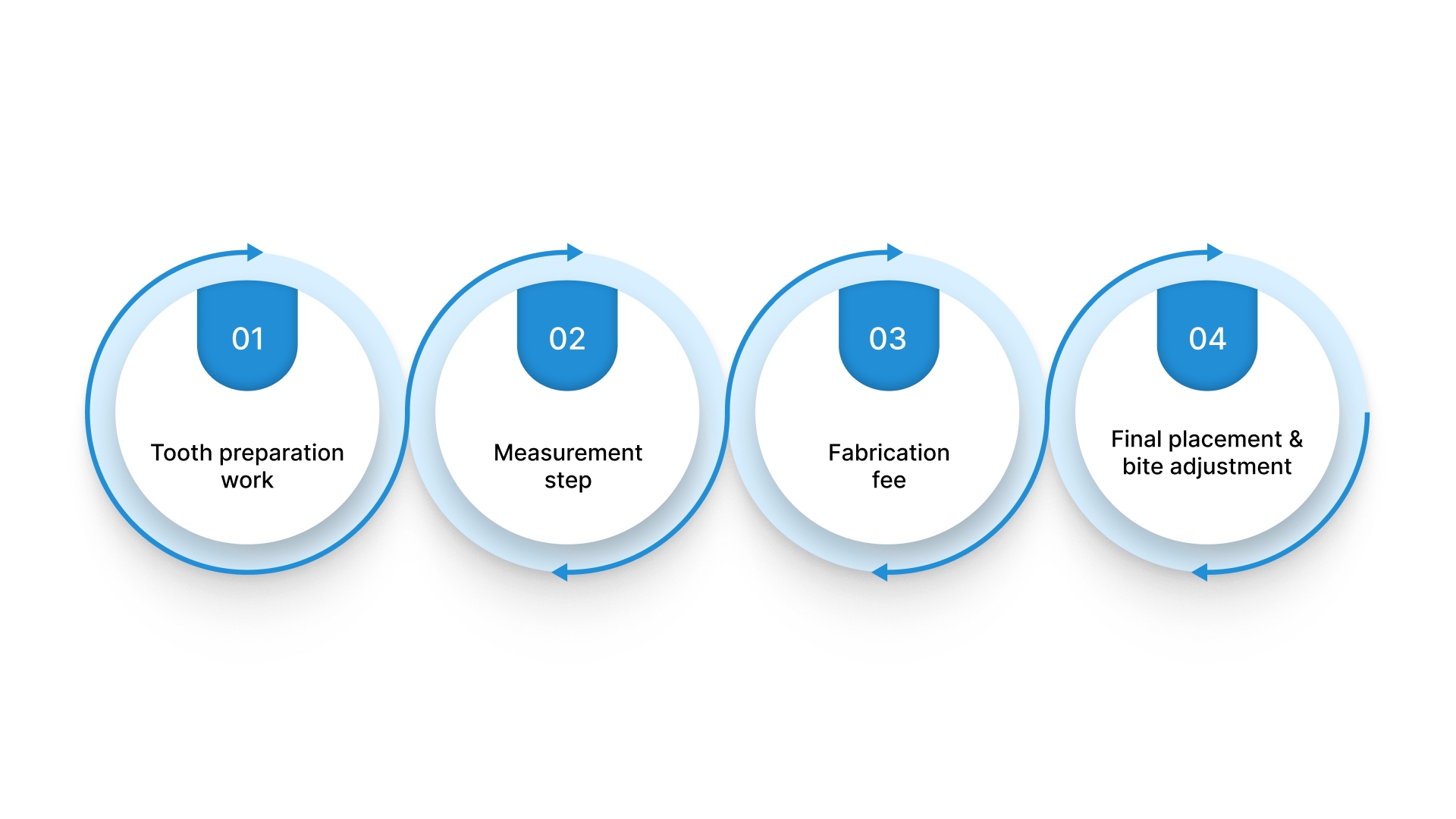
Instead of focusing on dental codes, look for these categories inside the crown fee:
Tooth preparation work (getting the tooth ready to hold the crown)
Measurement step (scan or impression)
Fabrication fee (lab-made or in-office-made crown)
Final placement and bite adjustment (cementation + bite check)
If your quote is bundled, ask the office to confirm these are included. If it is itemized, check that each category appears somewhere.
Items That Often Sit Outside The Crown Fee
These are common “before” or “support” charges that may be listed separately depending on the office:
Exam/consult fee (especially if you are new to the clinic)
X-rays or imaging (sometimes needed to confirm the tooth condition)
Temporary crown (often included, sometimes separate)
Extra adjustment visit (if your bite needs additional fine-tuning)
The goal is not to argue these charges. The goal is to know they exist so you can compare quotes fairly.
The Add-Ons That Change The Total Fast
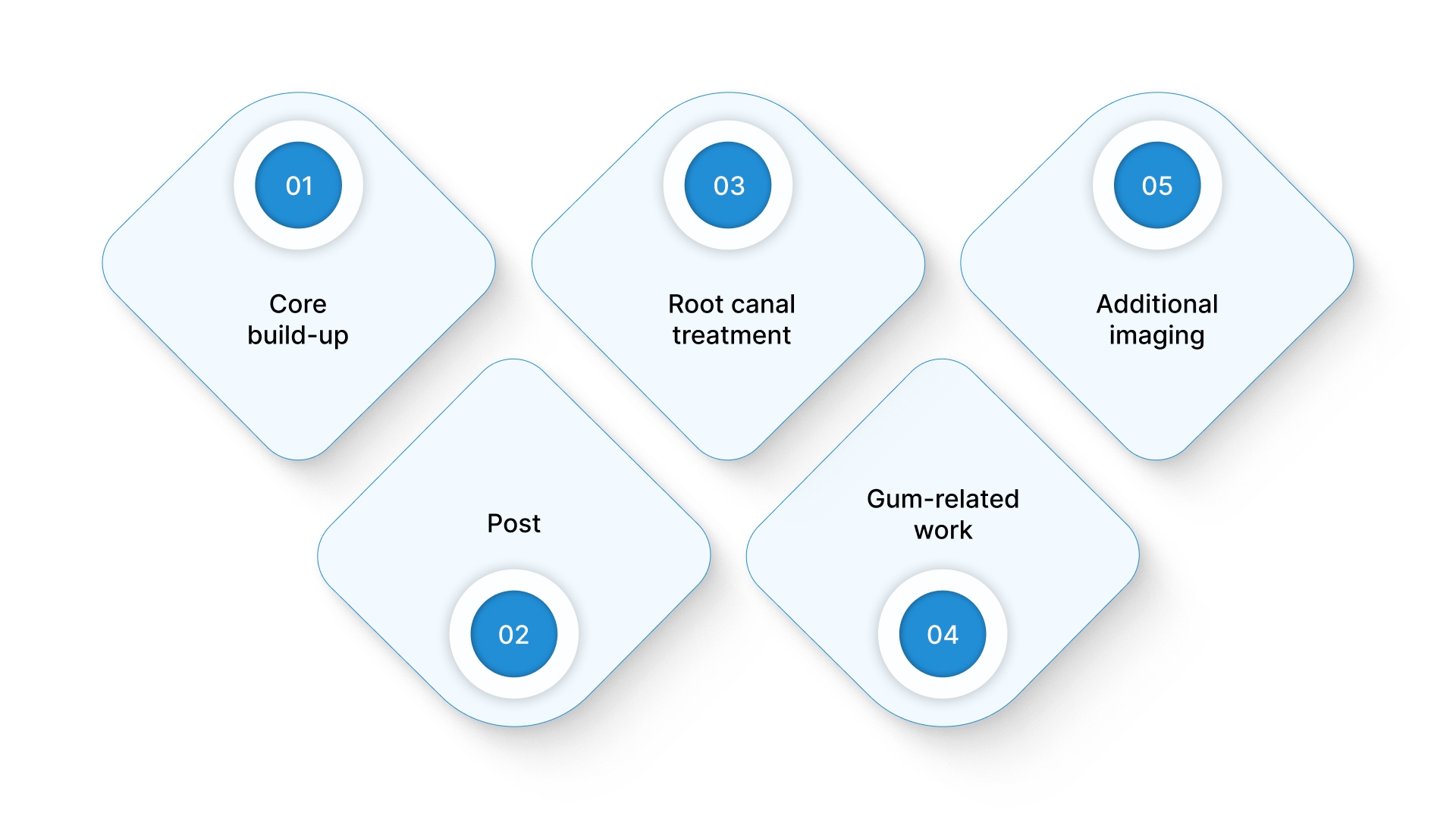
These are the kinds of work that become necessary if the tooth cannot support a crown as-is:
Core build-up: the tooth needs rebuilding, so the crown has something solid to sit on
Post: added support when there is very little natural tooth left
Root canal treatment: needed when the nerve is infected or the tooth is too compromised
Gum-related work: needed when the margin is hard to access or seal cleanly
Additional imaging: needed when the dentist needs more clarity before proceeding
How To Spot A Quote That Is Missing Information
A quote is hard to trust if it does not clearly state:
Which tooth does the quote apply to (tooth number)
Which crown material is planned
What the total includes vs what may be separate
What add-ons are possible, and what would trigger them
Even a quick email or written note from the clinic covering these points makes the estimate usable for comparison.
The estimate is clearer now. Material choice is easier to evaluate because you know what you’re comparing and what can shift the total.
Which Crown Material Fits Your Tooth And Budget?
The right choice of material depends on your tooth, your bite, and what you can realistically spend. A simple filter keeps the decision grounded and avoids paying extra for upgrades you don’t need.
Use these four filters. They keep the decision practical and stop “upgrade pressure.”
Tooth location: front teeth reward better aesthetics; back teeth punish weak materials.
Bite force: grinding/clenching needs higher fracture resistance.
Space available: some materials need more thickness; tight bites limit choices.
What do you value more: natural look, maximum durability, or keeping costs down?
Crown Material Comparison:
Decision Factor | PFM (Porcelain-Fused-to-Metal) | All-Ceramic / Porcelain | Zirconia (Monolithic / Full) | Gold / Metal Alloy | Temporary (Acrylic/Resin) |
|---|---|---|---|---|---|
Best Use Case | Back teeth or mixed priorities (durability + decent look) | Front teeth where appearance matters most | Back teeth, heavy bite, grinders | Long-lasting function, back teeth, strong bite | Short-term protection only |
Strength Under Chewing | Strong base; reliable for heavy chewing | Good, but less forgiving in heavy bite zones (depends on ceramic type) | Very high fracture resistance | Excellent; very forgiving | Low |
Looks In Real Life | Looks good, but may show a dark edge near the gums in some cases | Most natural-looking | Can look natural, but translucency varies by type | Visible metal (not cosmetic) | Acceptable short-term |
Tooth Reduction / Space Needs | Moderate | Often needs more space than metal; varies by type | Often needs less thickness than porcelain options; still needs proper design | Often needs less tooth reduction than ceramics | Minimal; placeholder |
Common Downsides | Aesthetic limitations near the gumline; the porcelain layer can chip | More sensitive to bite forces; not ideal for strong grinders | Can feel “too hard” in some bites if not polished well | Aesthetics: Some people prefer non-metal | Not designed for long wear; can stain or break |
Relative Cost Direction | Medium | Medium–High | Medium–High | High (varies by metal prices) | Low |
Which Material Makes Sense For Your Tooth?
If the tooth is a back molar and you want durability first → zirconia or metal often comes up.
If the tooth is front and visible → all-ceramic/porcelain often comes up.
If you need a balance and the dentist wants a proven workhorse → PFM is still common.
If you’re offered a material you did not expect → it’s usually because of bite force or space limits, not aesthetics.
Material choice is a starting point. Clear answers on scope and add-ons keep the estimate from drifting.
What Should You Ask Before You Agree To A Crown?
You do not need to negotiate. You need clarity. These questions help you confirm scope, prevent surprise add-ons, and keep the total from changing after you commit.
Confirm These In Writing
Email is fine. Get these points confirmed before you schedule:
The total you are approving today
What situations require a new approval before proceeding (add-ons, extra imaging, anything outside the plan)
Whether you are being billed as in-network or standard fee (if you are using coverage)
Who handles paperwork: office files vs you submit
Set The “No Surprises” Expectation
Say this upfront:
“If anything changes the total, please pause and confirm with me before doing extra work.”
Use the questions below to remove gaps before the appointment is locked in.
Questions To Prevent Surprises Later
Scope
“What is the goal of the crown for this tooth?”
“What problem are you solving by doing a crown instead of a filling or another option?”
Estimate Clarity
“Can you confirm what’s included in the total and what may be billed separately?”
“What are the top add-ons that could apply in my case, and what would trigger them?”
Material
“Which crown material are you planning for this tooth, and why for this location?”
“Is this recommendation mainly for strength, appearance, or space limits?”
Process
“Is this a same-day crown or two visits?”
“What steps happen at each visit, and what could change the plan mid-way?”
Coverage Handling (Keep It Minimal)
“Will you submit a pre-treatment estimate if I’m using coverage?”
“What do you need from me to run it, and when will I get the expected out-of-pocket?”
Policy / If Something Goes Wrong
“If the crown feels high or needs adjustment, what happens?”
“If it needs a remake, what is your policy and what costs could apply?”
If The Number Still Doesn’t Work, Pick One Practical Path
Get one more estimate using the same tooth and the same material, so the comparison is fair.
Ask what can be staged if timing is flexible and the dentist says it is safe.
Explore dental school or community clinic options if longer appointments are workable.
If financing is offered, confirm total amount, due dates, and what happens if the plan changes, in writing.
Decision Checks to Use After The Answers
Pause before scheduling if any of these are unclear:
The total includes/excludes are not confirmed in writing.
Add-ons are described as “we’ll see later” without a pause-and-confirm plan.
Material choice is presented as an upgrade, not a fit decision.
The office can’t explain how coverage will be checked (if you’re using it).
If the crown still won’t fit your budget after this, ask about alternatives and the tradeoffs that come with them.
What Alternatives Might Be Discussed If A Crown Is Not Affordable?
If a crown is outside your budget right now, do not “skip treatment.” You need to understand what other paths exist and what you would be trading off. Dentists often have a few options they can discuss depending on how much healthy tooth is left and how much force that tooth takes when you chew.
Your dentist is the only person who can tell you what is safe for your teeth.
Alternatives A Dentist May Bring Up
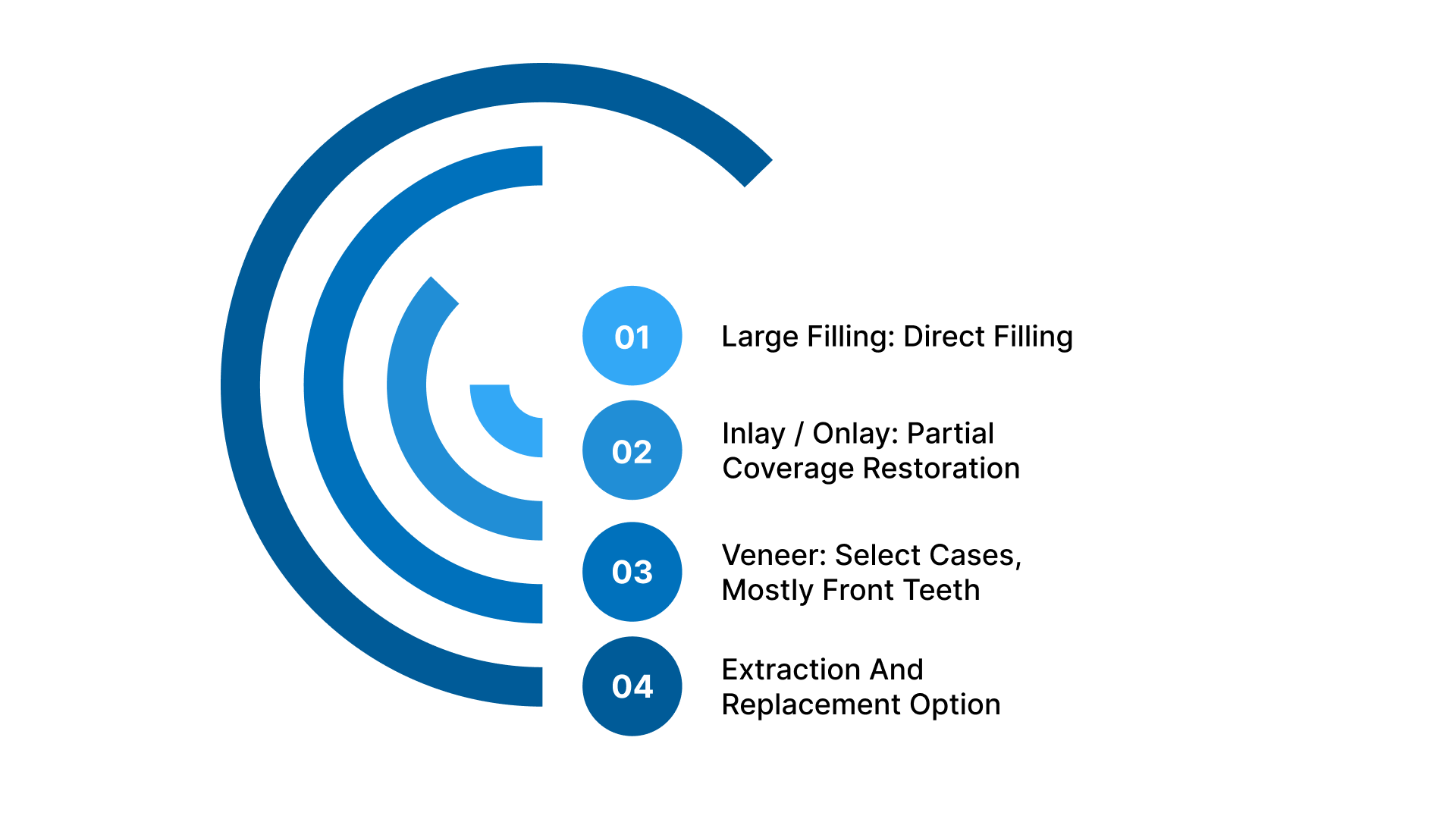
Large Filling: Direct Filling
A bigger filling may be discussed when the damage is limited enough that the tooth can still hold a restoration without cracking. It is often a faster and lower-cost option than a crown, but it may not be ideal for teeth that take heavy bite force.
Inlay / Onlay: Partial Coverage Restoration
An inlay or onlay can sometimes sit between a filling and a full crown. It may be discussed when part of the tooth needs coverage, but a full crown is not necessary. The fit is still custom, but the coverage area is smaller than a crown.
Veneer: Select Cases, Mostly Front Teeth
A veneer is usually cosmetic and is not a substitute for a crown in many structural cases. It may come up for front teeth when the goal is appearance, and the tooth does not need full coverage for strength.
Extraction And Replacement Options
If a tooth cannot be restored affordably or predictably, extraction may be discussed. Replacement options can include:
a removable partial (in some cases)
a bridge (depends on adjacent teeth)
an implant (when appropriate)
This is not always a cheaper route long-term, so it’s worth discussing the total cost over time.
What Usually Determines Whether These Alternatives Are Possible
The decision is usually shaped by practical limits, not preference:
How much healthy tooth structure is left
Whether the tooth is cracked or at high risk of cracking
How deep the decay or damage goes
Where the tooth sits (front vs back) and how much bite force it takes
Gumline access and whether a clean seal is possible
In other words, some alternatives are reasonable stopgaps. Others may increase the risk of a bigger, more expensive problem later.
Three Questions That Give You a Straight Answer:
“Is the tooth restorable right now?”
“What is the risk if I delay?”
“What is the lowest-cost option that still protects the tooth?”
If cost is the main barrier, the most helpful next step is to check coverage options before you schedule major work.
TrueCost Group As The Next Step When Crown Cost Is The Blocker
If you’re delaying a crown because of cost, checking dental coverage options before scheduling can change what you pay out-of-pocket.
TrueCost Group helps you find affordable dental coverage options and understand what’s realistically available in your state, without sending you through confusing plan language or multiple sales calls.
Here’s what you get on the dental side:
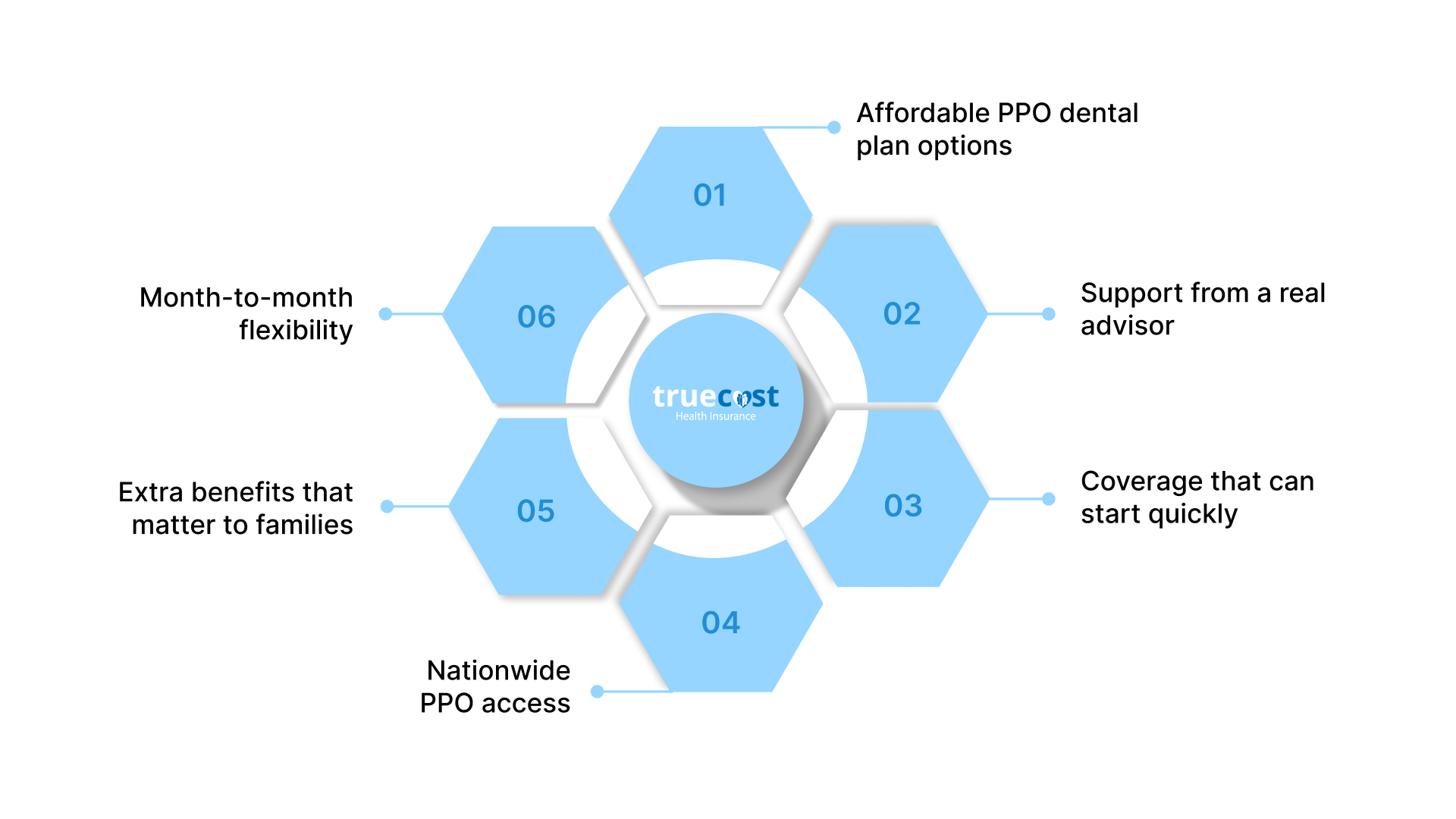
Affordable PPO dental plan options designed for real-world needs (cleanings, X-rays, fillings, crowns, dentures, and more, based on plan terms).
Support from a real advisor who walks you through plan options and what happens after enrollment, step by step.
Coverage that can start quickly for many plans, so you’re not forced into a long wait before getting treatment (exact eligibility varies).
Nationwide PPO access through large dentist networks, helpful if you want flexibility on where you get care.
Extra benefits that matter to families, like vision and hearing credits included in some plans (plan terms vary).
Month-to-month flexibility in many cases, so you’re not locked into a long contract (plan terms vary).
For households watching every expense, the win isn’t “finding the cheapest crown.” It’s avoiding a cash decision when a coverage option could reduce out-of-pocket costs and make treatment feel doable.
Get your quote through Messenger to see dental coverage options that may fit your budget and timeline.
Conclusion
Crown pricing feels extreme because it is a custom dental work, and the total can change fast when the tooth needs extra support before a crown can hold long-term. The best way to stay in control is to understand the estimate, choose a material that fits your tooth and bite, and get clear answers before you schedule.
If cost is the main reason you are delaying care, do not lock yourself into a cash decision without checking coverage options first. TrueCost Group can help you explore affordable dental coverage options and understand what paths may be available, so you can move forward with a plan that fits your budget.
FAQs
How long do crowns usually last?
Lifespan varies based on bite force, tooth location, and oral care. Your dentist can tell you what’s realistic for your case and what signs would mean the crown needs attention.
Why do some dentists quote one price and others quote a much higher one?
Quotes can differ because offices bundle items differently, use different labs, and recommend different materials or workflows. Comparing is only fair when the scope and material are the same.
Is a same-day crown cheaper than a two-visit crown?
Not always. Same-day crowns can reduce visits, but the equipment and workflow may change pricing. Ask whether the quote changes based on same-day vs lab-made.
Can I get a crown without a root canal?
Sometimes, yes. A root canal is only discussed when the nerve is infected or the tooth is too compromised. Your dentist decides based on symptoms, testing, and imaging.
Why does the price change after the tooth is prepared?
Sometimes the dentist finds the tooth needs extra support or the plan needs adjustment. This is why written confirmation on what triggers add-ons helps prevent surprise totals.
Do crowns hurt, and how long does recovery take?
Many people feel mild soreness or bite sensitivity for a short period. Persistent pain, swelling, or a “high bite” feeling should be checked quickly.