
A lifetime maximum in dental insurance caps the total amount your plan pays over your entire enrollment period. Most policies set this ceiling between $1,000 and $2,000 per year, though some insurers offer more generous coverage. This limit resets annually, which means you get a fresh allowance each calendar year.
The concern arises when you need extensive work, like implants or orthodontics, where costs can quickly eat through your annual cap. Once you hit that threshold, every additional dollar comes out of your pocket until the year rolls over.
We'll explain how these maximums work in practice, when they become a real constraint, and what strategies help you make the most of your coverage.
Key Takeaways
Lifetime maximums never reset and apply only to orthodontic treatments like braces and aligners.
Annual maximums refresh yearly, covering general dental care like fillings, crowns, and root canals.
Once maxed out, you pay 100% of costs until your benefit period renews.
Split expensive treatments between December and January to tap two separate annual maximums.
TrueCost Group offers plans with $5,000 annual limits and no waiting periods.
What Is an Orthodontic Lifetime Maximum?
An orthodontic lifetime maximum represents the total dollar amount your dental insurance will pay for braces or aligners across your entire life. Unlike regular dental benefits that refresh yearly, this cap never resets.
Once you exhaust it, orthodontic coverage ends permanently under that policy. Most plans set this limit between $1,000 and $3,000 for life.
Here's how it plays out in practice. Say your plan offers a $2,000 lifetime orthodontic maximum with 50% coverage. You need braces that cost $5,000 total. Your insurer calculates its share first: 50% of $5,000 equals $2,500.
But your lifetime cap is only $2,000, so that becomes the ceiling. The insurance pays $2,000, and you cover the remaining $3,000 out of pocket. Once that $2,000 gets used, you've tapped out your orthodontic benefit forever under this policy.
If your child needs braces ten years later, you'll pay 100% yourself because the lifetime maximum is gone.
How Does a Lifetime Maximum Differ From an Annual Maximum?
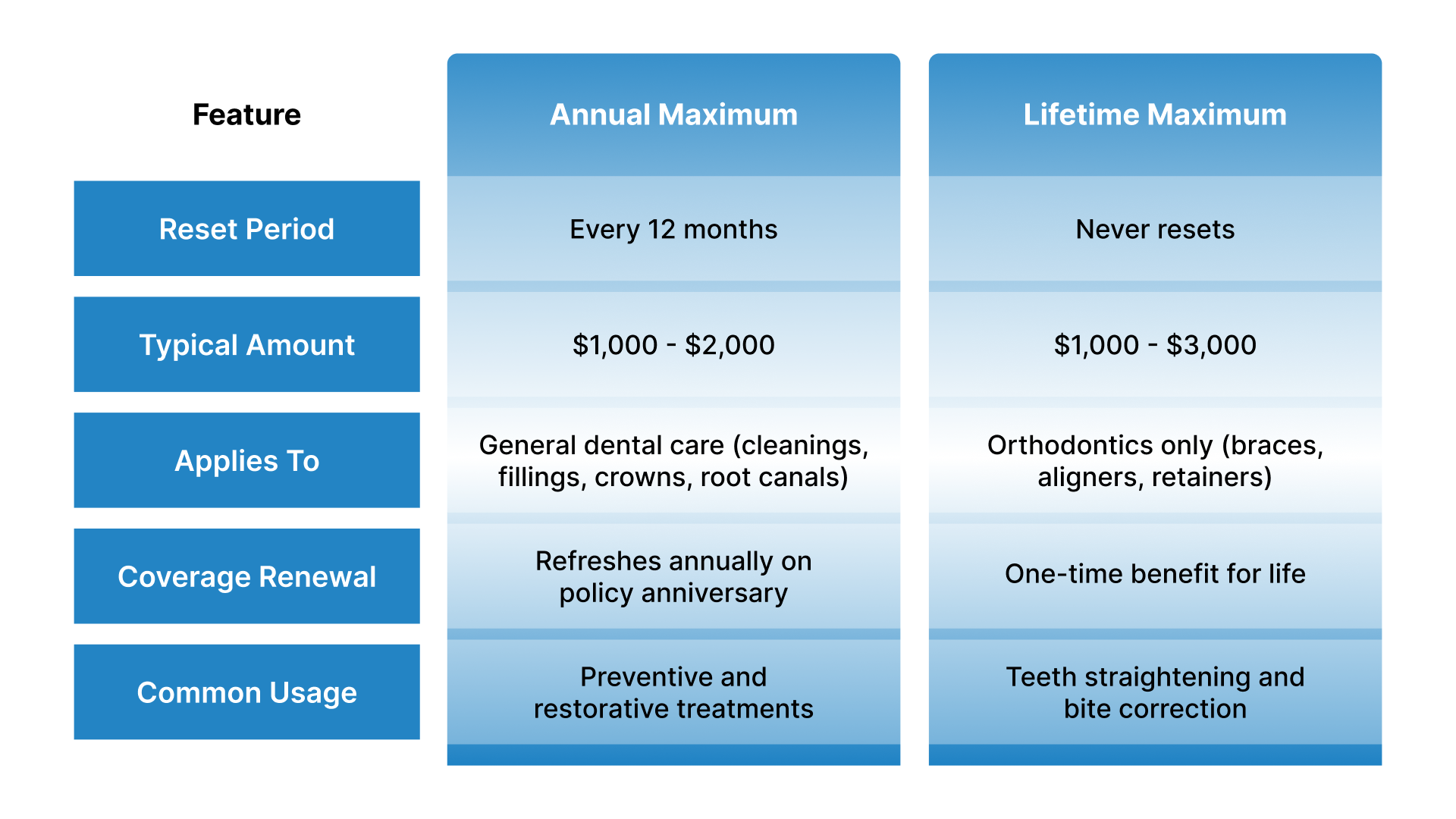
Annual maximums reset every twelve months, giving you renewed coverage for routine care and restorative procedures. Lifetime maximums stay fixed forever, applying exclusively to orthodontic treatment in most dental plans.
Which Treatments Fall Under an Orthodontic Lifetime Maximum?
Orthodontic lifetime maximums apply specifically to procedures that correct tooth alignment and jaw positioning. These treatments focus on straightening teeth, fixing bite issues, and improving overall dental function.
Not every dental procedure counts against this cap, only those classified as orthodontic care do.
Treatments covered under orthodontic lifetime maximums include:
Traditional metal braces for children and adults
Ceramic or clear braces that blend with tooth color
Lingual braces attached to the back of teeth
Clear aligners like Invisalign or ClearCorrect
Retainers used after active treatment ends
Palatal expanders to widen the upper jaw
Space maintainers that hold gaps for incoming teeth
Functional appliances that correct bite problems
Orthodontic consultations and diagnostic records
Adjustment appointments throughout treatment
Regular dental work like fillings, crowns, or root canals draws from your annual maximum instead. Orthodontic and general dental benefits operate on separate tracks within your insurance plan.
What Happens When Your Dental Insurance Is Maxed Out?
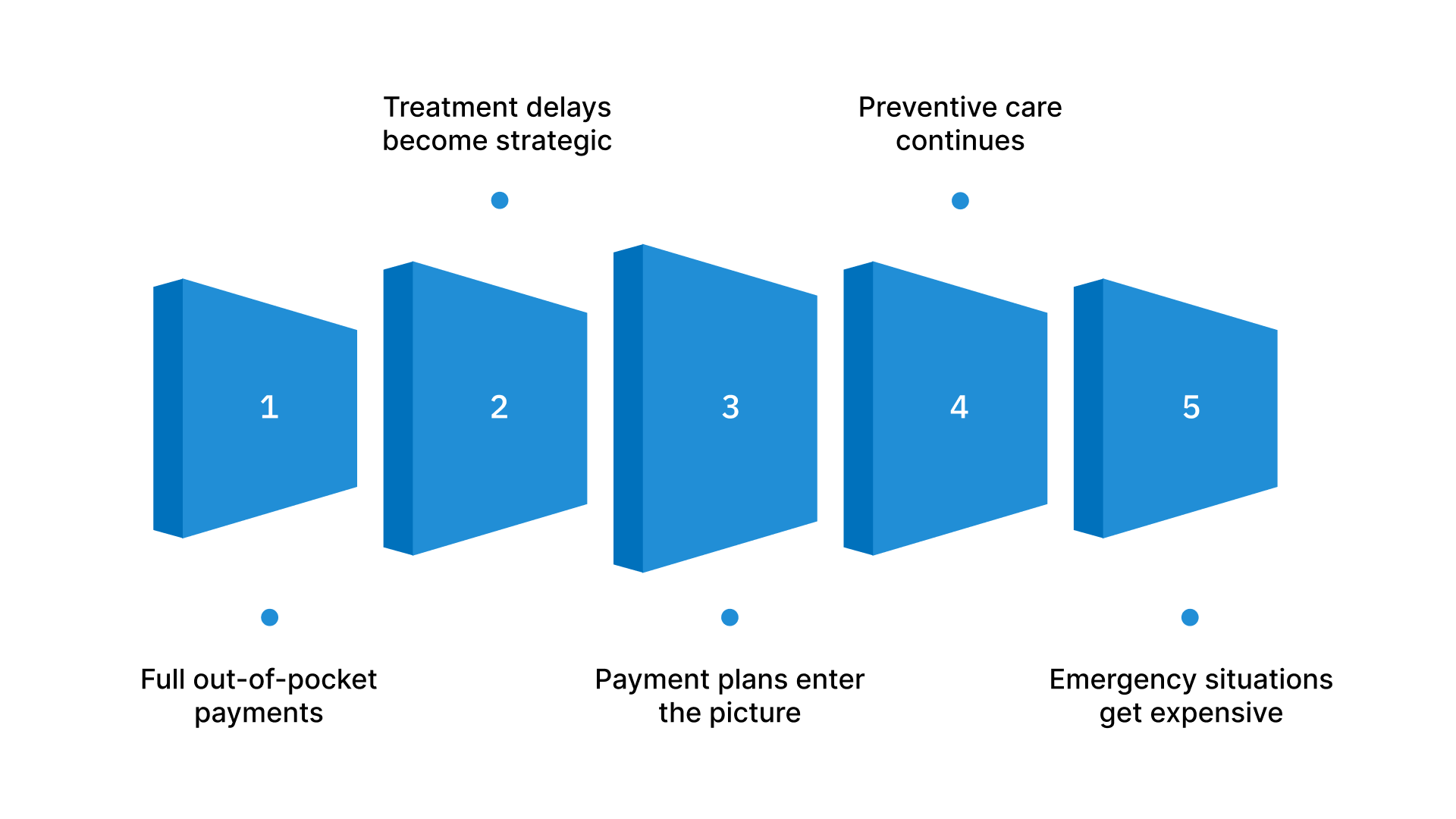
Once you hit your maximum, insurance stops contributing to covered procedures until the benefit period resets. You become responsible for all treatment costs from that point forward.
Immediate consequences of maxing out your dental coverage:
Full out-of-pocket payments: You pay 100% of all procedure costs yourself until your annual maximum is renewed the following calendar year.
Treatment delays become strategic: Many patients postpone non-urgent work like crowns or bridges until January when benefits refresh and coverage resumes.
Payment plans enter the picture: Dental offices often offer financing options or installment agreements to help you manage expensive procedures without insurance.
Preventive care continues: Most plans cover cleanings and exams at 100% outside the annual maximum, so routine checkups remain fully insured.
Emergency situations get expensive: Urgent needs like infections or broken teeth can't wait, forcing you to cover major costs entirely on your own.
How Can You Maximize Your Dental Insurance Benefits Before They Run Out?
Smart timing and planning can help you extract every dollar of value from your coverage. Coordinating treatments across benefit periods can significantly reduce your personal expenses.
Strategic approaches to optimize your dental insurance:
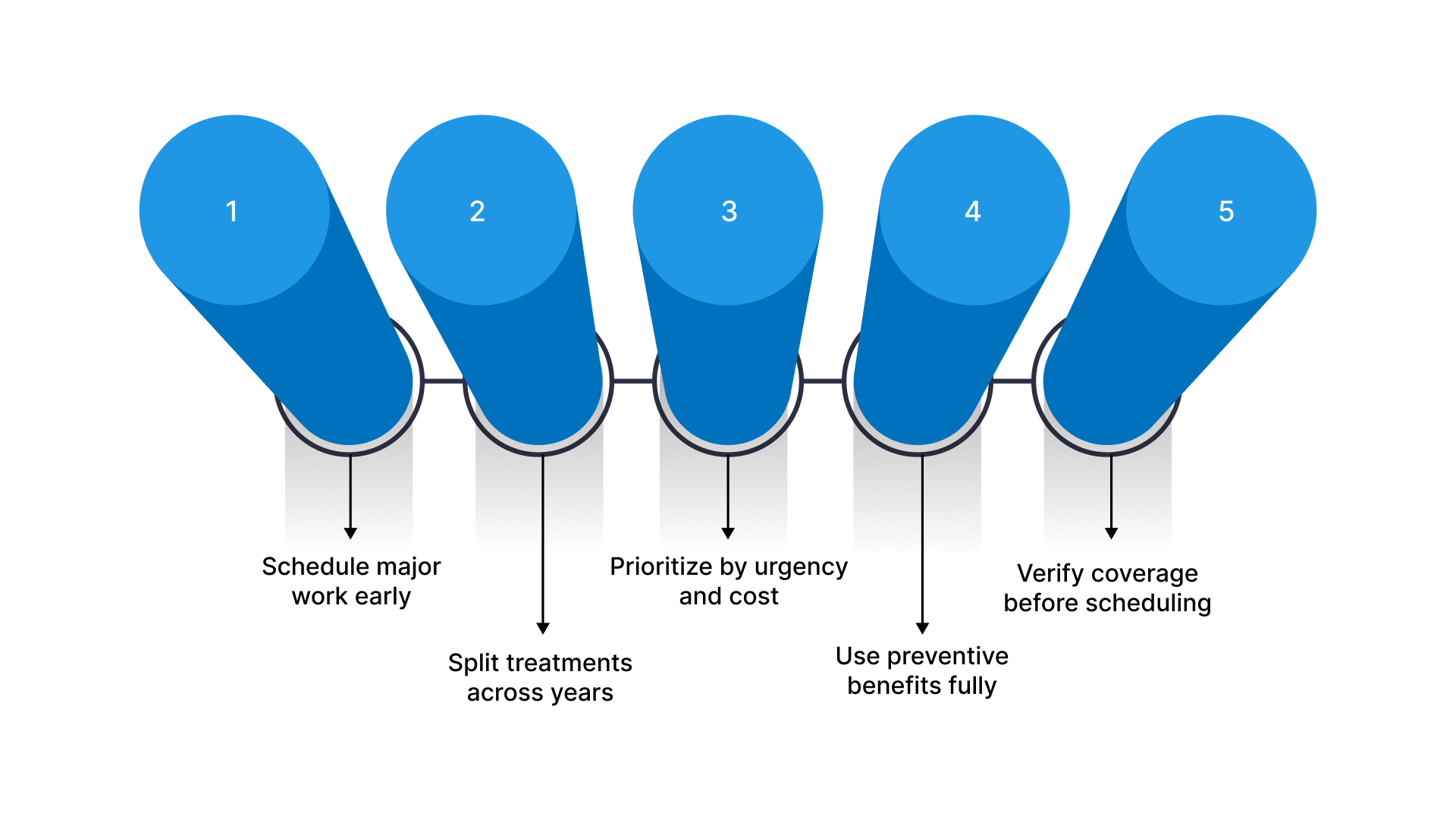
Schedule major work early: Book expensive procedures in January or February to maximize time before benefits potentially run out mid-year.
Split treatments across years: Divide extensive work between December and January so each portion draws from separate annual maximums for double coverage.
Prioritize by urgency and cost: Tackle the most critical or expensive procedures first while insurance dollars remain available in your account.
Use preventive benefits fully: Exhaust your no-cost cleanings and exams since they don't count toward maximums and help prevent bigger problems.
Verify coverage before scheduling: Call your insurer to confirm remaining benefits, so you know exactly what's left before committing to treatment.
TrueCost Group removes these barriers by helping you access high-limit PPO dental plans with immediate benefits. You receive expert guidance through simple messaging so you feel protected before your next dental visit.
Our plans offer up to $5,000 in annual coverage with no waiting periods for major work, giving you access to over 85,000 dentists nationwide through an easy online enrollment process.
Stop worrying about dental insurance maximums. Get your personalized quote today and start using your benefits immediately.
Conclusion
Dental insurance lifetime maximums create a permanent ceiling on orthodontic benefits, while annual maximums reset every year for general care. Understanding both limits helps you plan treatments strategically, spread costs across benefit periods, and avoid surprise bills.
The key is knowing your policy details upfront so you can coordinate with your dentist to maximize coverage and minimize what you pay yourself.
TrueCost Group specializes in high-limit PPO dental plans that give you up to $5,000 in annual coverage with zero waiting periods for major procedures. We'll guide you through messenger apps to find plans that actually protect you from day one, not six months down the road.
Reach out today to compare your insurance options and discover how much you can save on your next dental visit.
Frequently Asked Questions
1. What does lifetime maximum mean for dental insurance?
A lifetime maximum caps the total amount your dental insurance pays for orthodontic treatments across your entire life. Once exhausted, that benefit never renews.
2. Can I use my lifetime maximum for regular dental work?
No. Lifetime maximums apply exclusively to orthodontic care like braces and aligners. Regular dental procedures draw from your separate annual maximum instead.
3. What happens if I switch dental insurance plans?
Your lifetime maximum resets with a new carrier. Each insurance company tracks orthodontic benefits separately, giving you a fresh limit under different coverage.
4. Do all dental plans have lifetime maximums?
No. Many plans only include annual maximums for general care. Lifetime maximums appear specifically in policies that offer orthodontic coverage as a benefit.
5. How do I check my remaining lifetime maximum?
Call your insurance provider or check your online account portal. They'll confirm how much of your orthodontic lifetime benefit remains available for use.