Introduction
You wake up with a dull headache, your jaw feels tight and sore, and your partner mentions hearing a grinding noise during the night. If this sounds familiar, you're likely dealing with sleep bruxism—the unconscious grinding or clenching of teeth during sleep. Unlike occasional jaw tension, sleep bruxism is a persistent sleep-related movement disorder that affects approximately 13% of adults.
Many people don't realize they're grinding their teeth until significant damage has already occurred. A dentist might spot flattened enamel during a routine checkup, or a partner might report the nightly grinding noise before you do.
Left untreated, bruxism can lead to cracked teeth, TMJ disorders, and costly dental repairs. Understanding the root cause is the first step toward choosing a treatment that actually addresses it.
This article covers the root causes of nighttime teeth grinding, warning signs to watch for, consequences of leaving it untreated, and proven treatment options backed by clinical evidence.
Key Takeaways
- Stress, sleep disorders, certain medications, and genetics can all trigger nighttime teeth grinding — often without you realizing it
- Most people find out from a partner's complaint or a dentist spotting tooth wear
- Common signs include morning jaw pain, headaches, and tooth sensitivity
- Untreated bruxism causes serious dental damage, TMJ disorders, and chronic pain
- Treatments include custom night guards, stress management, muscle relaxants, and Botox injections
Why Do You Grind Your Teeth at Night?
Sleep bruxism is fundamentally different from daytime clenching. It occurs during sleep arousal cycles (the transitions from deeper to lighter sleep stages) and is not under your conscious control. Research shows that approximately 85.7% of grinding episodes are time-related to sleep arousals, often preceded by increased brain activity and heart rate.
The jaw force generated during sleep bruxism can be far stronger than any deliberate bite, and no single cause explains it. Here are the primary triggers:
Stress, Anxiety, and Emotional Tension
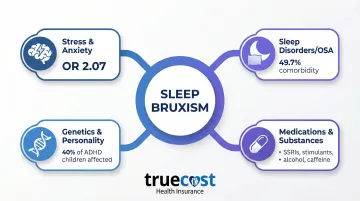
Heightened stress and anxiety activate your central nervous system even during sleep, triggering involuntary jaw muscle activity. Studies show a significant association between stress and bruxism, with an Odds Ratio of 2.07. People with bruxism show elevated levels of stress biomarkers including epinephrine, norepinephrine, cortisol, and dopamine.
This creates a self-reinforcing cycle: stressful days lead to nighttime grinding, which causes morning pain and fatigue, which feeds back into daytime stress. Breaking it typically requires addressing both the sleep behavior and its emotional root cause.
Sleep Disorders and Sleep Apnea
Sleep bruxism is classified as a sleep-related movement disorder and is closely linked to obstructive sleep apnea (OSA). The jaw may unconsciously clench as your body attempts to reopen a blocked airway. This connection is critical: 49.7% of adults with OSA have comorbid sleep bruxism.
Treating the underlying sleep disorder can reduce or eliminate grinding entirely. CPAP therapy has been shown to decrease bruxism episode frequency in patients with coexisting OSA. If you snore heavily or wake unrefreshed, ruling out sleep apnea is a logical first step.
Medications and Substance Use
Certain medications are documented triggers for bruxism:
- SSRIs (Selective Serotonin Reuptake Inhibitors): Antidepressants like fluoxetine, sertraline, and paroxetine are commonly reported offenders, with symptoms typically appearing within 3-4 weeks of starting or increasing the dose
- ADHD medications: Stimulants including methylphenidate and amphetamines are strongly associated with increased tooth grinding
The proposed mechanism involves serotonergic inhibition of dopaminergic pathways that control movement. If you develop grinding after starting a new medication, discuss switching to alternatives like bupropion or mirtazapine with your doctor.
Lifestyle substances that increase bruxism risk include:
- Tobacco
- Alcohol
- Caffeine
- Recreational drugs (especially MDMA)
These stimulate the nervous system in ways that disrupt sleep quality and increase muscle activity during sleep.
Genetic and Personality Factors
Beyond external triggers, some people are simply wired toward bruxism. Twin studies show higher concordance in identical twins than fraternal twins, pointing to a genetic component.
Personality also plays a role. Certain traits correlate with higher bruxism rates:
- High-strung or hyperactive temperament
- Competitive, Type-A personality
- ADHD — 40% of children with ADHD have sleep bruxism versus 7.5% of controls
One long-held assumption worth correcting: dental misalignment is not the primary driver. Current evidence points to central nervous system regulation, not bite anatomy, as the root mechanism.
Signs You're Grinding Your Teeth in Your Sleep
Because sleep bruxism is unconscious, most people only discover it indirectly. Here are the most telling physical warning signs:
- Jaw muscles feel tired or achy when you wake up, even without any obvious cause
- Dull, recurring headaches that run from the temples to the forehead and are worst in the morning
- Tooth sensitivity or pain with no visible decay or cavities to explain it
- Clicking or popping in the jaw joints, especially when you first open your mouth after waking
- Visibly enlarged jaw muscles on the sides of the face from chronic overuse
How Most People Discover They Grind
The two most common discovery paths are:
- A sleep partner hears the grinding noise during the night
- A dentist notices flattened, chipped, or worn enamel during a routine checkup
If you suspect you grind your teeth, a dentist can typically confirm it through a clinical exam and patient history. In some cases, an overnight sleep study may be recommended to rule out sleep apnea—a critical step since treating OSA can eliminate the grinding entirely.
What Happens If Bruxism Goes Untreated?
Ignoring sleep bruxism leads to progressive damage that becomes increasingly expensive and painful to treat.
Dental Damage Progression
Untreated grinding causes cumulative mechanical damage:
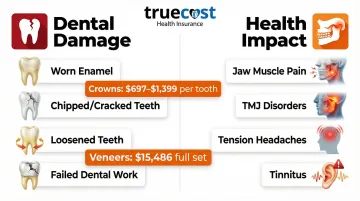
- Worn enamel: Enamel wears down, exposing sensitive inner layers
- Chipped or cracked teeth: Excessive force causes fractures
- Loosened teeth: Chronic grinding destabilizes teeth in their sockets
- Damaged dental work: Crowns, fillings, and implants fail prematurely
The financial impact is substantial. Patients with bruxism have a Hazard Ratio of 2.962 for implant-supported crown failure. Repair costs add up quickly:
- Dental crowns: $697 to $1,399 per tooth
- Veneers: Single veneers average $1,765; a full set averages $15,486
Musculoskeletal Consequences
Chronic jaw clenching leads to serious joint and muscle problems:
- Jaw muscle pain: Persistent aching that worsens with chewing or talking
- TMJ disorders: Clicking, restricted movement, and pain radiating to the ears and neck
- Once TMJ disorders are established, treatment is both challenging and costly — often requiring specialist care, physical therapy, or surgery
Quality-of-Life Impacts
Secondary effects include:
- Tension headaches: Daily headaches that don't respond well to standard pain relievers
- Disrupted sleep: The grinding noise affects both you and your partner
- Tinnitus: Ringing in the ears that develops as jaw dysfunction worsens
The longer bruxism goes untreated, the more systems it affects — from your teeth and jaw to your sleep and daily comfort. That's exactly why catching it early changes the treatment equation entirely.
Proven Treatments for Nighttime Teeth Grinding
Treatment for sleep bruxism typically requires addressing both the symptom (tooth and jaw damage) and the underlying cause. A single solution rarely works for everyone, and a healthcare provider should guide your approach.
Night Guards and Bite Splints
A custom-fitted night guard is a hard acrylic splint worn over the upper or lower teeth during sleep. It doesn't stop the grinding but absorbs and redistributes the force, protecting teeth and reducing muscle strain. It's the most widely recommended first-line treatment.
Custom vs. Over-the-Counter:
| Guard Type | Cost Range | Notes |
|---|---|---|
| Custom (Dentist-Made) | $300–$800 | Best fit, most effective protection |
| Custom (Online Lab) | $100–$200 | Good fit, lower cost |
| OTC (Boil-and-Bite) | $15–$30 | Poor fit, may increase clenching |
Custom guards offer better fit and more effective protection than over-the-counter options. Soft OTC splints can actually worsen clenching in some patients.
Cost is a real barrier for many people — but dental coverage can help. Many Americans don't realize that some health insurance plans include dental benefits. TrueCost Group helps people find ACA marketplace and Medicare Advantage plans that may include dental coverage, which can offset the cost of a custom night guard. Medicare Advantage plans, in particular, often bundle dental, vision, and hearing benefits at $0 monthly premiums for qualified individuals.
Stress Management and Behavioral Therapy
For people whose bruxism is driven by stress or anxiety, behavioral approaches are especially effective:
- Cognitive Behavioral Therapy (CBT) targets the anxiety and stress patterns driving the habit
- Biofeedback monitors jaw muscle tension in real time to train relaxation — studies show approximately 50% reduction in grinding episodes in short-term trials
- Mindfulness and relaxation practices such as meditation or progressive muscle relaxation
Practical daytime habits that reduce nighttime grinding:
- Jaw relaxation exercises throughout the day
- Maintaining a pre-sleep wind-down routine
- Consciously keeping teeth apart and jaw muscles relaxed during waking hours

Medications
Short-term medication use can provide relief:
- Muscle relaxants reduce jaw tension during sleep — clonazepam (0.5 mg at bedtime) showed a 42% reduction in bruxism index in controlled trials, though dependency risk limits long-term use
- Antidepressant adjustments: If your SSRI is causing bruxism, your doctor may switch you to bupropion or mirtazapine, both of which carry lower bruxism risk
If anxiety or depression is a root driver, appropriately prescribed antidepressants that don't list bruxism as a side effect can indirectly reduce grinding by addressing the underlying emotional trigger.
Botox and Professional Procedures
Botox (botulinum toxin) injections into the masseter jaw muscles temporarily weaken them, reducing the force of grinding. While not FDA-approved specifically for bruxism, it has been used safely off-label for severe cases. Effects typically last 3–4 months, requiring repeat injections.
Orthodontic corrections may be recommended when a structural bite issue is a contributing factor. That said, dentists don't recommend grinding teeth down to adjust bite unless there's strong evidence of an occlusal cause — current research shows dental anatomy is not the primary driver of sleep bruxism.
Long-Term Habits to Help Control Bruxism
No single habit eliminates bruxism overnight, but consistent lifestyle changes reduce how often — and how intensely — it occurs. These adjustments work best alongside the treatments covered earlier in this guide:
- Cut back on alcohol, caffeine, and tobacco — especially in the hours before bed, since all three worsen sleep quality and ramp up muscle activity overnight
- Address underlying sleep disorders like sleep apnea with a qualified specialist; treating the root sleep problem often reduces bruxism significantly on its own
- Book dental checkups every 6–12 months so your dentist can track tooth wear and adjust your night guard fit before minor damage becomes a costly fix
- Track your stress with a journal and work with a therapist to identify triggers; bruxism tends to flare during high-stress periods, making consistent stress management one of the most reliable long-term controls
Frequently Asked Questions
How do I stop grinding my teeth at night?
The most effective approach combines a custom night guard to protect teeth with addressing the root cause—whether that's stress management, treating sleep apnea, or adjusting medications. A dentist or doctor should guide your treatment plan.
Is night teeth grinding bad?
Occasional grinding is usually harmless, but chronic nighttime bruxism causes serious damage over time including cracked teeth, TMJ disorders, chronic headaches, and tooth loss. The longer it goes untreated, the more costly and complex the treatment becomes.
Why do I unconsciously grind my teeth at night?
Sleep bruxism occurs during sleep arousal cycles and is not under conscious control. It's linked to central nervous system activity during sleep transitions, often triggered by stress, sleep disorders, or certain medications.
Is teeth grinding an ADHD thing?
ADHD is listed as an associated condition for bruxism—both share neurological components, and some ADHD medications can also trigger grinding as a side effect. People with ADHD should discuss this risk with their prescribing doctor.
Can teeth grinding be cured permanently?
Bruxism can rarely be fully cured, but it can be effectively managed. Many people see significant reduction or full remission when the underlying trigger (stress, sleep apnea, medication) is addressed. Children often outgrow it naturally.
Does a night guard stop teeth grinding or just protect teeth?
A night guard does not stop the grinding behavior itself—it acts as a protective barrier to absorb force and prevent tooth damage. Stopping the grinding requires addressing the root cause through behavioral, medical, or lifestyle interventions.
If you suspect you're grinding your teeth at night, schedule a dental exam and identify whether stress, sleep disorders, or medications are contributing. The sooner you intervene, the less damage you'll face—and the lower your treatment costs.
Dental care costs can add up quickly, especially if bruxism goes untreated for years. Health plans through the ACA marketplace and Medicare Advantage often include dental benefits that can offset those costs. TrueCost Group helps Americans find coverage from major carriers—many qualifying for plans starting at $0/month. Call their licensed advisors at 1-888-788-8285 to find a plan that fits your budget.