Introduction: Why Wisdom Teeth Removal Is So Common
Wisdom teeth removal is one of the most frequently performed surgical procedures among young adults in the United States. Each year, dentists and oral surgeons extract third molars from approximately 5 million Americans—roughly 10 million teeth total. Despite how routine this procedure has become, not everyone actually needs their wisdom teeth extracted.
Many patients struggle with understanding when removal is medically necessary vs. when monitoring is sufficient. Pain, swelling, and infection are obvious red flags, but wisdom teeth can also cause hidden damage without symptoms—making the decision more complex than it initially appears.
Understanding when extraction is truly needed can help you make an informed decision and avoid unnecessary surgery. This guide covers the evolutionary reasons behind wisdom tooth problems, common complications that develop, clear signs removal is necessary, and practical considerations including timing and insurance coverage.
TLDR: Key Takeaways About Wisdom Teeth Removal
- Modern jaws are too small for wisdom teeth—an evolutionary mismatch causing 90% of impactions
- Impaction, infection, crowding, and damage to adjacent teeth are the most common problems
- Removal becomes necessary with pain, infection, cysts, or improper emergence
- Not all wisdom teeth require removal—healthy, functional ones need only regular monitoring
- Late teens to early 20s: easier procedures, faster healing, fewer complications
What Are Wisdom Teeth and Why Do We Have Them?
Wisdom teeth are the third set of molars that typically emerge between ages 17 and 25, earning their name because they appear during the "age of wisdom" when young adults reach maturity. These late-arriving molars served an important evolutionary purpose for our ancestors, who needed extra grinding power to process tough, raw foods like roots, nuts, leaves, and uncooked meat.
Modern diets have made wisdom teeth unnecessary. Cooked foods, food preparation tools, and softer processed foods eliminated the survival advantage these extra molars once provided.
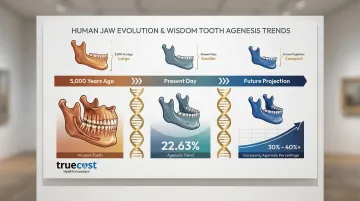
Human jaws have also changed dramatically:
- Jaws have become smaller and narrower over the past 5,000 years
- Research comparing Neolithic mandibles to modern humans shows our ancestors had significantly larger jaws
- Today's humans rarely have adequate room for third molars to emerge properly
Wisdom teeth are gradually disappearing from the human population altogether. A global meta-analysis found that approximately 22.63% of people are born without at least one wisdom tooth, with Asian populations showing the highest rates at nearly 30%. This phenomenon—called agenesis (the absence of tooth development)—represents an ongoing evolutionary trend toward fewer molars.
Common Problems Caused by Wisdom Teeth
Impacted Wisdom Teeth
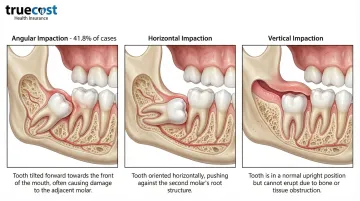
Impaction occurs when wisdom teeth cannot fully emerge through the gums due to insufficient space or improper positioning. The American Association of Oral and Maxillofacial Surgeons reports that nine out of ten people have at least one impacted wisdom tooth.
The three main impaction types include:
- Angular impaction - Tooth tilts toward neighboring molars (most common at 41.8% of cases)
- Horizontal impaction - Tooth lies sideways in the jawbone
- Vertical impaction - Tooth grows upright but remains blocked by gum tissue or bone
Infections and Gum Disease
Partially erupted wisdom teeth create pockets between the tooth and gum tissue where bacteria accumulate. This leads to pericoronitis, a painful gum infection that affects 6-10% of partially erupted wisdom teeth, most commonly in patients aged 20-29.
These infections can spread to adjacent teeth and surrounding gum tissue, potentially causing chronic periodontal disease that damages bone and connective tissue.
Tooth Decay and Cavities
Wisdom teeth sit at the very back of the mouth, making them extremely difficult to clean properly. Even diligent brushing and flossing often can't reach them.
This poor access increases cavity risk in both the wisdom teeth and neighboring second molars, which can develop decay where wisdom teeth press against them.
Dental Crowding and Shifting
Beyond decay and infection, erupting wisdom teeth create alignment problems. They can push against existing teeth, causing:
- Crowding and shifting throughout the mouth
- Misalignment of previously straight teeth
- Reversal of orthodontic work (undoing years of braces or aligners)
- Front teeth pushed out of corrected positions
Cysts and Tumors
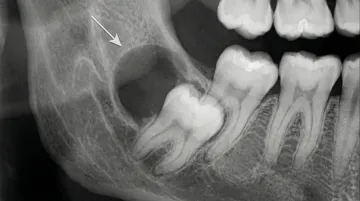
Fluid-filled sacs called cysts can develop around impacted wisdom teeth within the jawbone. Research shows cysts occur in approximately 2.24% of impacted wisdom teeth cases, while tumors develop in about 1.16%.
Untreated cysts expand over time, damaging the jawbone, nerves, and adjacent teeth. In rare cases, these cysts can develop into tumors requiring extensive surgical intervention.
Jaw Pain and Stiffness
Impacted wisdom teeth frequently cause chronic discomfort beyond the immediate area:
- Persistent jaw pain and stiffness
- Restricted mouth opening
- Persistent headaches
- Earaches that seem unrelated
Many patients don't initially connect these symptoms to their wisdom teeth until a dental evaluation reveals the underlying cause.
Signs You May Need Wisdom Teeth Removed
Watch for these warning signs that indicate wisdom tooth problems:
- Pain or tenderness in the back of the mouth
- Swelling, redness, or bleeding in the gums at the back of the mouth
- Persistent bad breath or unpleasant taste
- Difficulty fully opening your mouth or noticeable jaw stiffness
- Visible signs such as a tooth emerging at an odd angle or teeth shifting position
If you experience any of these symptoms, schedule a dental evaluation promptly. Many ACA marketplace and Medicare Advantage plans include dental coverage that can help manage these costs—contact a licensed advisor to explore your options.
When Wisdom Teeth Removal Is Necessary
The American Dental Association identifies clear criteria for medically necessary wisdom teeth removal:
- Pain that doesn't resolve with conservative treatment
- Repeated infections (infections around partially erupted teeth)
- Cysts or tumors developing around the tooth
- Damage to neighboring teeth
- Gum disease affecting the wisdom tooth area
- Extensive tooth decay that cannot be treated with fillings
Beyond these clear medical indications, dentists often recommend preventive removal when X-rays show wisdom teeth developing at problematic angles, even before symptoms appear.
By age 25, approximately 50% of privately insured U.S. patients have undergone at least one wisdom tooth extraction, reflecting how common problematic third molars are. Understanding whether your procedure falls under medical necessity can affect how your health insurance plan covers the treatment.
Surgical Removal for Impacted Teeth
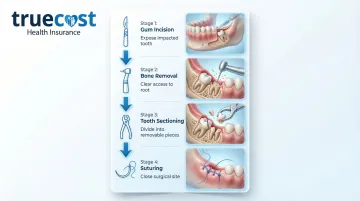
Impacted wisdom teeth almost always require surgical removal by an oral surgeon. They cannot be extracted using simple techniques appropriate for fully erupted teeth.
The surgical approach involves:
- Incisions in the gum tissue to expose the tooth
- Removal of bone blocking access to the tooth root
- Sectioning the tooth into smaller pieces for easier removal
- Sutures to close the surgical site
When You Might Not Need Removal
Wisdom teeth don't always require removal. They can remain in place if they meet all of these criteria:
- Healthy with no decay or infection
- Fully erupted through the gum tissue
- Positioned correctly in the dental arch
- Biting properly with opposing teeth
- Cleanable with regular brushing and flossing
The American Dental Association states that asymptomatic, disease-free wisdom teeth may be monitored rather than automatically removed. However, "asymptomatic" doesn't necessarily mean "disease-free"—damage can occur without noticeable symptoms.
This makes ongoing monitoring essential. Patients who keep their wisdom teeth should maintain regular dental checkups every six months with periodic X-rays to monitor for developing problems.
Research shows that approximately 39% of retained wisdom teeth are eventually extracted, highlighting that complications can develop even after years without issues.
Age and Timing Considerations
Age significantly impacts wisdom teeth removal outcomes. Removal is typically recommended in the late teens to early twenties because:
- Tooth roots are not fully formed, making extraction simpler
- Jawbone is less dense, requiring less force during removal
- Healing capacity is at its peak
- Complication rates are significantly lower compared to older patients
Patients over age 25-30 face higher risks of complications, including nerve injury, dry socket (painful bone exposure after extraction), and prolonged recovery times.
The increased bone density and fully formed roots in older patients make the surgical procedure more complex and traumatic to surrounding tissues.
Conversely, patients over 30 who have never experienced wisdom tooth problems are statistically less likely to develop them, though monitoring remains important.
Emergency removal due to infection or severe pain is always more complicated, painful, and has longer recovery than preventive removal, making early evaluation beneficial even if immediate extraction isn't necessary.
Cost and Insurance Considerations for Wisdom Teeth Removal
Understanding the financial side of wisdom teeth removal helps you plan for the procedure. Costs vary based on complexity, anesthesia type, and your location.
Estimated Cost Ranges:
- Simple extraction (fully erupted): $100-$250 per tooth
- Soft tissue impaction: $150-$350 per tooth
- Partial bony impaction: $200-$450 per tooth
- Complete bony impaction: $250-$600 per tooth
- Complex surgical extraction: $300-$800 per tooth
Anesthesia adds additional costs:
- Local anesthesia: Typically included in extraction fee
- IV sedation: $250-$500
- General anesthesia: $500-$1,000

These out-of-pocket costs can add up quickly, especially if you're removing all four teeth. That's where insurance coverage becomes critical.
Many dental insurance plans cover 50-80% of medically necessary wisdom teeth removal costs, though coverage percentages and annual maximums vary widely by plan.
Pediatric dental coverage is an essential health benefit for children under 19 under the ACA, which may cover wisdom teeth removal for younger patients. Some Medicare Advantage plans also include dental benefits that help with extraction costs for eligible seniors.
If you're facing a $1,500-$3,000 bill for wisdom teeth removal and don't have dental coverage, TrueCost Group's licensed advisors can help you explore health plans that include dental benefits. Many Americans don't realize they qualify for subsidized coverage that makes these procedures more affordable. Call 1-888-788-8285 to learn about coverage options that may reduce your out-of-pocket costs.
Frequently Asked Questions
Do all wisdom teeth need to be removed?
No. Only wisdom teeth that cause problems or are likely to cause problems based on positioning require removal. Healthy, fully erupted wisdom teeth that function properly and can be cleaned adequately may be monitored instead.
At what age should wisdom teeth be removed?
The ideal window is late teens to early twenties when roots aren't fully formed and healing is faster. However, removal can be performed at any age if problems develop.
How do I know if my wisdom teeth are impacted?
Symptoms include pain, swelling, and visible angling of partially emerged teeth. X-rays during routine dental checkups definitively diagnose impaction before symptoms appear.
What happens if I don't remove problematic wisdom teeth?
Complications include recurring infections, damage to adjacent teeth, cyst formation, and eventually more complex surgery. Problems typically worsen over time rather than resolving.
Is wisdom teeth removal a major surgery?
It's an outpatient procedure performed under local anesthesia with optional sedation. Recovery takes several days to a week, with younger patients healing faster.
Can wisdom teeth cause problems even if they don't hurt?
Yes. Damage to adjacent teeth, bone loss, and gum disease can develop silently. This is why regular dental X-rays and monitoring are important even for asymptomatic wisdom teeth.