
Dental insurance covers wisdom teeth removal in most cases, but not medical insurance. The confusion is understandable since the procedure involves surgery, anesthesia, and real recovery time.
Coverage depends on whether the procedure is routine or medically complicated. Medical insurance steps in only when infections, cysts, or nerve involvement push the case beyond standard dental work.
This article breaks down exactly when each type of insurance applies, what the procedure costs, and how to avoid paying more than necessary.
Key Takeaways
Dental insurance covers most wisdom teeth removals; medical insurance only covers complicated cases with broader health issues.
Wisdom teeth extraction falls under major dental procedures, with plans covering 50% to 80% after your deductible.
Without insurance, simple extractions cost $75 to $200 per tooth; impacted teeth run $225 to $600 each.
TrueCost Group offers PPO plans with up to $5,000 in annual benefits and zero waiting periods for major procedures.
Call your insurer, request pre-authorization, and review plan documents before scheduling to avoid surprise billing later.
Is Wisdom Teeth Removal Considered Basic or Major for Insurance?
Wisdom teeth removal falls under major dental services for insurance purposes. Most plans categorize extractions, especially surgical ones, as major procedures rather than basic care.
This classification means you'll typically face higher out-of-pocket costs. Coverage usually sits between 50% and 80% after you meet your annual deductible.
Medical vs. Dental Insurance: When Each Plan Covers Wisdom Teeth Removal
Situation | Medical Insurance | Dental Insurance |
|---|---|---|
Tumor or cyst threatening the jawbone | ✓ Covered | |
Facial trauma requiring emergency extraction | ✓ Covered | |
Severe infection spreading to the facial tissues | ✓ Covered | |
Pre-surgical prep for radiation or transplant | ✓ Covered | |
Congenital jaw conditions or birth defects | ✓ Covered | |
Impacted or sideways-growing wisdom teeth | ✓ Covered | |
Crowding prevention and alignment protection | ✓ Covered | |
Extensive decay that can't be restored | ✓ Covered | |
Gum disease around neighboring teeth | ✓ Covered | |
Chronic pain from nerve or tooth pressure | ✓ Covered |
Most wisdom teeth removals fall under dental insurance since complications requiring medical coverage are relatively uncommon. When in doubt, get a written diagnosis from your oral surgeon before submitting claims to either insurer.
Wondering if your current plan will actually cover the extraction when the time comes? TrueCost Group connects you with affordable PPO dental plans offering up to $5,000 in annual benefits. Get 100% coverage for cleanings and checkups, and zero waiting periods for major procedures like wisdom teeth removal.
Our nationwide network includes thousands of dentists, with plans starting under $1 per day and coverage beginning immediately.
Get an instant quote from us to get started with your dental coverage right away.
How Much Does Wisdom Teeth Removal Cost Without Insurance?
According to CostHelper, wisdom teeth removal costs vary widely based on complexity, anesthesia, and provider setting. Without insurance, pricing reflects both surgical difficulty and sedation choice.
Simple extraction: Fully erupted teeth removed with local anesthesia usually cost $75 to $200 per tooth, or $300 to $800 for all four.
Impacted tooth extraction: Removal of impacted teeth typically ranges from $225 to $600 per tooth, depending on depth and bone involvement.
Sedation add-ons: Nitrous oxide may add $40 to $90, while general anesthesia can increase total costs by $250 to $800.
Multiple tooth packages: Removing all four teeth together often costs $1,000 to $2,300, with complex cases reaching $3,000 in high-cost regions.
These ranges explain why uninsured patients often face significant bills. Coverage planning before surgery helps control both expected and unexpected costs.
How to Check If Your Insurance Covers Wisdom Teeth Removal?
Checking your coverage before scheduling the procedure saves you from surprise bills later. Start by gathering your insurance card and any recent dental statements to streamline the process.
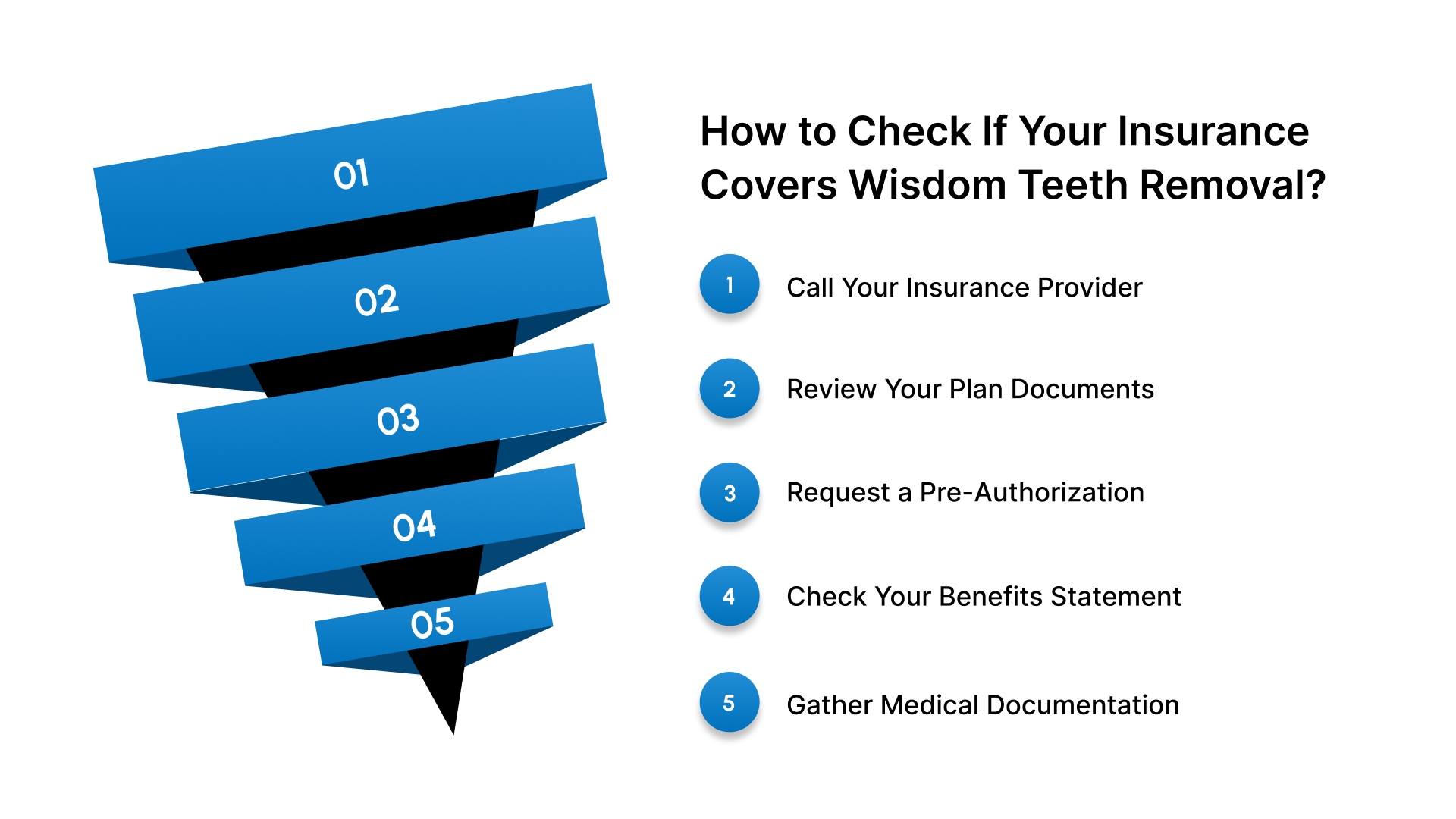
Call Your Insurance Provider: Contact the customer service number and ask specifically about oral surgery benefits, coverage percentages, and your current deductible status.
Review Your Plan Documents: Log into your online portal to find the section on major dental procedures and check annual maximums or waiting periods.
Request a Pre-Authorization: Have your dentist's billing office submit your case details to get an official breakdown of covered costs before treatment.
Check Your Benefits Statement: Review recent Explanation of Benefits documents to see how your deductible progress and remaining annual maximum for the year.
Gather Medical Documentation: Ask your dentist for records showing medical necessity if complications arise, which can significantly strengthen your coverage claim.
Should I Get Dental Insurance for Wisdom Teeth Removal?
Getting dental insurance specifically for wisdom teeth removal makes financial sense if the procedure costs exceed your annual premiums and deductibles. Run the numbers based on your expected extraction complexity and timeline.
Calculate Your Total Extraction Cost: Get quotes from dentists for your specific case, including sedation options and the number of teeth requiring removal.
Compare Premium Costs: Add up annual premiums, enrollment fees, and deductibles to determine your total insurance investment for the year ahead.
Check Waiting Periods: Verify whether the plan imposes waiting periods for major procedures, as some require six to twelve months before coverage begins.
Review Annual Maximums: Confirm that the plan's annual benefit cap covers a substantial portion of your estimated extraction costs, ideally $1,500 or higher.
Assess Your Timeline: Determine if you need immediate treatment or can wait through any required waiting periods without risking complications or pain.
Factor in Additional Benefits: Consider whether you'll use the plan for routine cleanings, checkups, and other dental work beyond wisdom teeth removal.
Evaluate Network Providers: Ensure your preferred oral surgeon or dentist participates in the plan's network to maximize your coverage benefits and minimize costs.
TrueCost Group Helps You Cover Wisdom Teeth Costs With Confidence
TrueCost Group connects you with affordable PPO dental plans designed for immediate use, eliminating the frustration of waiting periods and coverage gaps.
Choosing TrueCost gives you clear advantages before any dental visit:
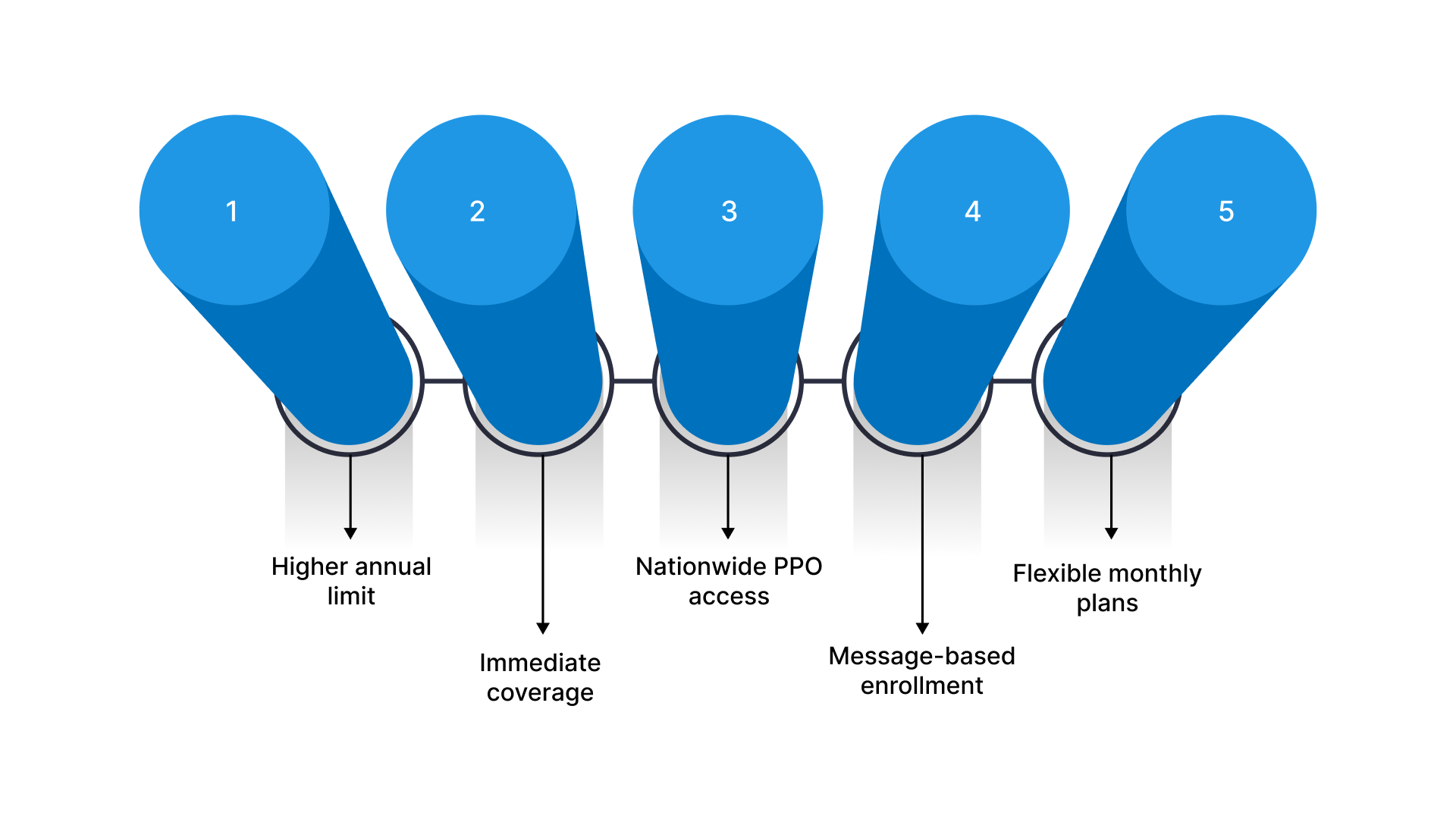
Higher annual limits: Access plans with up to $5,000 in yearly dental benefits for extractions, crowns, root canals, and major procedures.
Immediate coverage: Skip long waiting periods and begin treatment as soon as coverage starts.
Nationwide PPO access: Select from more than 85,000 dentists and oral surgeons offering negotiated rates that reduce out-of-pocket costs.
Message-based enrollment: Get covered through WhatsApp or Facebook Messenger without paperwork or complex forms.
Flexible monthly plans: Maintain control with no long-term contracts and the freedom to cancel anytime.
We remove the confusion through real advisor support using simple messaging. Coverage aligns with treatment plans before costs escalate.
Connect with us today for a free quote and get the dental protection you need before your wisdom teeth removal procedure.
Conclusion
Wisdom teeth removal coverage depends on whether your situation falls under dental or medical insurance categories. Understanding the distinction helps you prepare financially and avoid unexpected bills.
Most cases get handled through dental plans with coverage between 50% and 80%, while medical insurance steps in only when complications arise. Verify your benefits early, compare costs against plan limits, and explore package deals if multiple teeth need removal.
TrueCost Group specializes in connecting you with PPO dental plans offering up to $5,000 in annual benefits and immediate coverage for major procedures like wisdom teeth extraction.
Coverage options include trusted providers such as HealthSpring dental insurance and UHOne dental insurance, giving access to broad PPO networks and flexible plan structures.
We eliminate waiting periods and guide you through enrollment via simple messaging apps you already use daily. Get your free quote now and secure dental protection that starts working the moment you need it most.
Frequently Asked Questions
1. Does medical insurance ever cover wisdom teeth removal?
Yes, but only when removal addresses medical conditions like tumors, cysts, severe infections, facial trauma, or pre-surgical requirements for radiation or transplants.
2. What's the difference between dental and medical coverage for extractions?
Dental insurance covers routine oral health extractions. Medical insurance covers only when wisdom teeth relate to broader health conditions beyond standard dental care.
3. How much will I pay out-of-pocket with dental insurance?
Most dental plans cover 50% to 80% of extraction costs after your deductible. Your final bill depends on complexity and your plan's annual maximum.
4. Can I get dental insurance right before my wisdom teeth removal?
Yes, but check the waiting periods first. TrueCost Group offers plans with zero waiting periods, letting you start major procedure coverage immediately after enrollment.
5. Is wisdom teeth removal worth getting insurance for?
If your out-of-pocket costs exceed annual premiums plus deductibles, insurance makes financial sense. Complex cases costing $1,500 to $3,000 benefit most from coverage.