Dental insurance can cover braces, but coverage depends on your specific plan and whether the treatment is deemed medically necessary or cosmetic. Most plans cover braces for children and teens up to 50-80% when there's a documented medical need, like severe misalignment or bite issues.
Adult coverage is trickier since many insurers view braces as elective after age 18. The fine print matters here: lifetime maximums for orthodontics, waiting periods before coverage kicks in, and pre-authorization requirements can all affect your final payout.
We'll walk you through how coverage works across different plan types, what documentation you need, and smart strategies to get the most from your benefits.
Key Takeaways
Dental insurance covers braces 50-80% for children; adult coverage is limited and harder to obtain.
PPO plans offer provider flexibility with $1,500-$3,000 maximums; DHMO plans cost less but restrict choices.
Medical insurance rarely covers braces unless treating jaw deformities, injuries, or documented sleep apnea.
FSA and HSA accounts reduce braces costs by 20-30% through pre-tax dollars for eligible expenses.
TrueCost Group provides immediate PPO coverage up to $5,000 annually with no waiting periods.
Does Medical Insurance Cover Braces?
Medical insurance rarely covers braces since orthodontic treatment falls under dental care, not medical care. Your health insurance policy treats braces as a dental procedure, which means it won't process claims for brackets, wires, or routine adjustments.
Exceptions where medical insurance might cover braces:
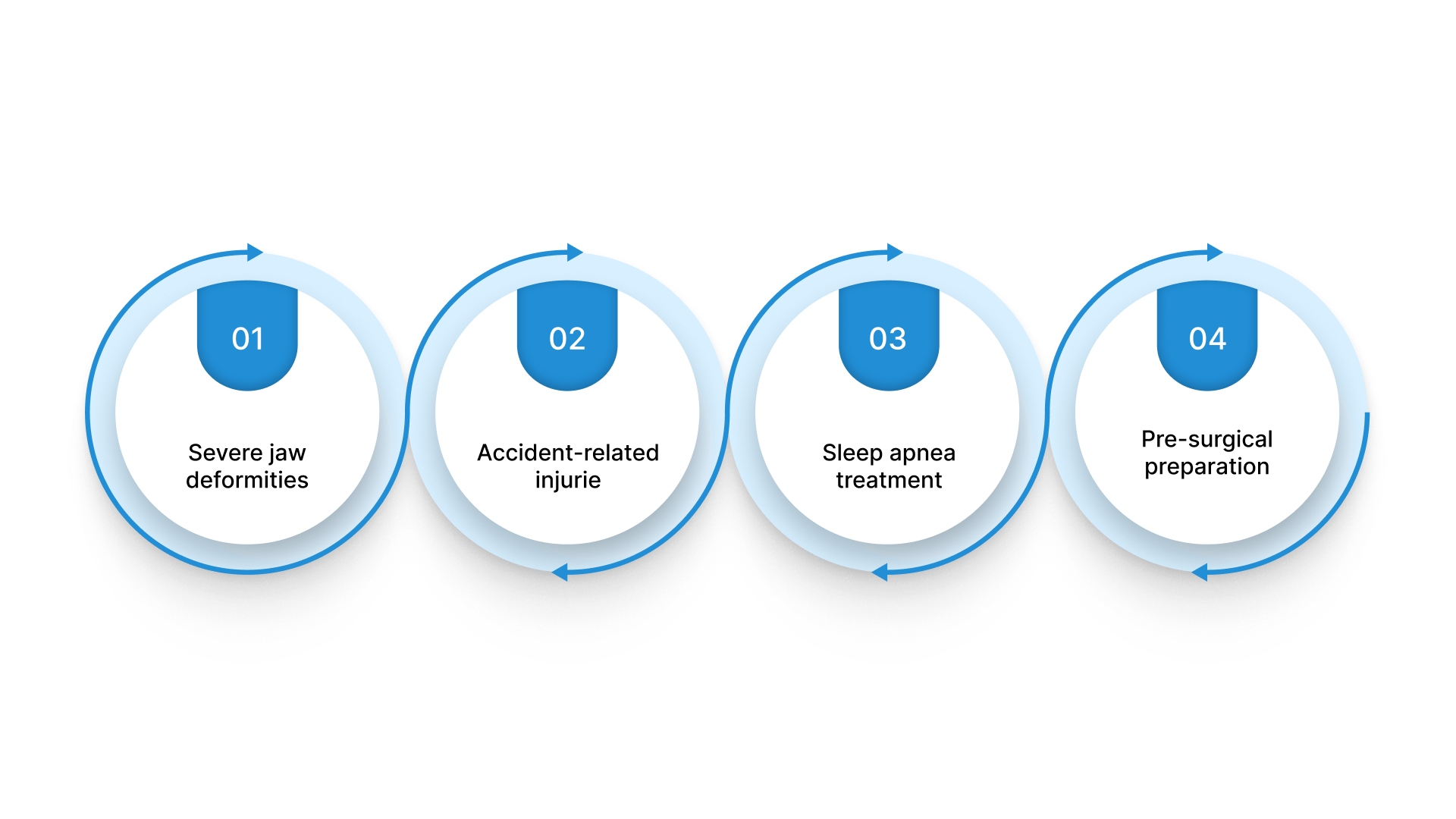
Severe jaw deformities: When braces are part of treating congenital conditions like cleft palate or craniofacial abnormalities.
Accident-related injuries: If trauma from an accident requires orthodontic correction as part of reconstructive treatment.
Sleep apnea treatment: When orthodontics directly addresses airway obstruction documented through sleep studies.
Pre-surgical preparation: If jaw surgery is medically necessary, braces may be required before or after the procedure.
Even in these cases, your medical insurer will require extensive documentation from both your orthodontist and physician. They need proof that the treatment addresses a medical condition rather than cosmetic concerns. Pre-authorization is mandatory, and denial rates remain high without compelling medical evidence.
Most people need to rely on dental insurance or payment plans for standard orthodontic work.
Does Dental Insurance Cover Braces for Children and Adults?
Dental insurance covers braces differently based on age, with children and teens receiving significantly better benefits than adults. Planners recognize that early orthodontic intervention often prevents more serious dental problems down the road.
Coverage for children and teens (under 18):
Standard coverage: Most plans cover 50-80% of orthodontic costs after deductibles are met.
Lifetime maximums: Benefits typically cap at $1,000-$3,000
for all orthodontic work during childhood.
Medical necessity: Coverage applies when braces correct functional issues like severe crowding, crossbites, or overbites.
Age limits: Full pediatric benefits usually extend through age 18 or until treatment completion.
Coverage for adults (18 and older):
Limited availability: Only a small percentage of dental plans include adult orthodontic coverage.
Lower reimbursement: Adult coverage typically pays 25-50%
compared to 50-80% for children.
Stricter requirements: Insurers demand proof of medical necessity rather than cosmetic improvement.
Higher out-of-pocket costs: Lifetime maximums for adults often sit at $1,000 or less.
The reasoning behind this disparity is simple. Insurers view childhood orthodontics as preventive care that avoids complex dental issues later. Adult braces are classified as elective since your jaw and facial bones have finished developing.
Some plans exclude adult orthodontics entirely, while others bundle it with pediatric coverage at reduced rates. Always verify your specific policy details before starting treatment.
What Are the Best Dental Insurance Options for Braces?
Choosing the right dental insurance for braces comes down to understanding two main plan types. Each offers distinct advantages depending on your budget, flexibility needs, and how much control you want over provider selection.
PPO (Preferred Provider Organization) Plans
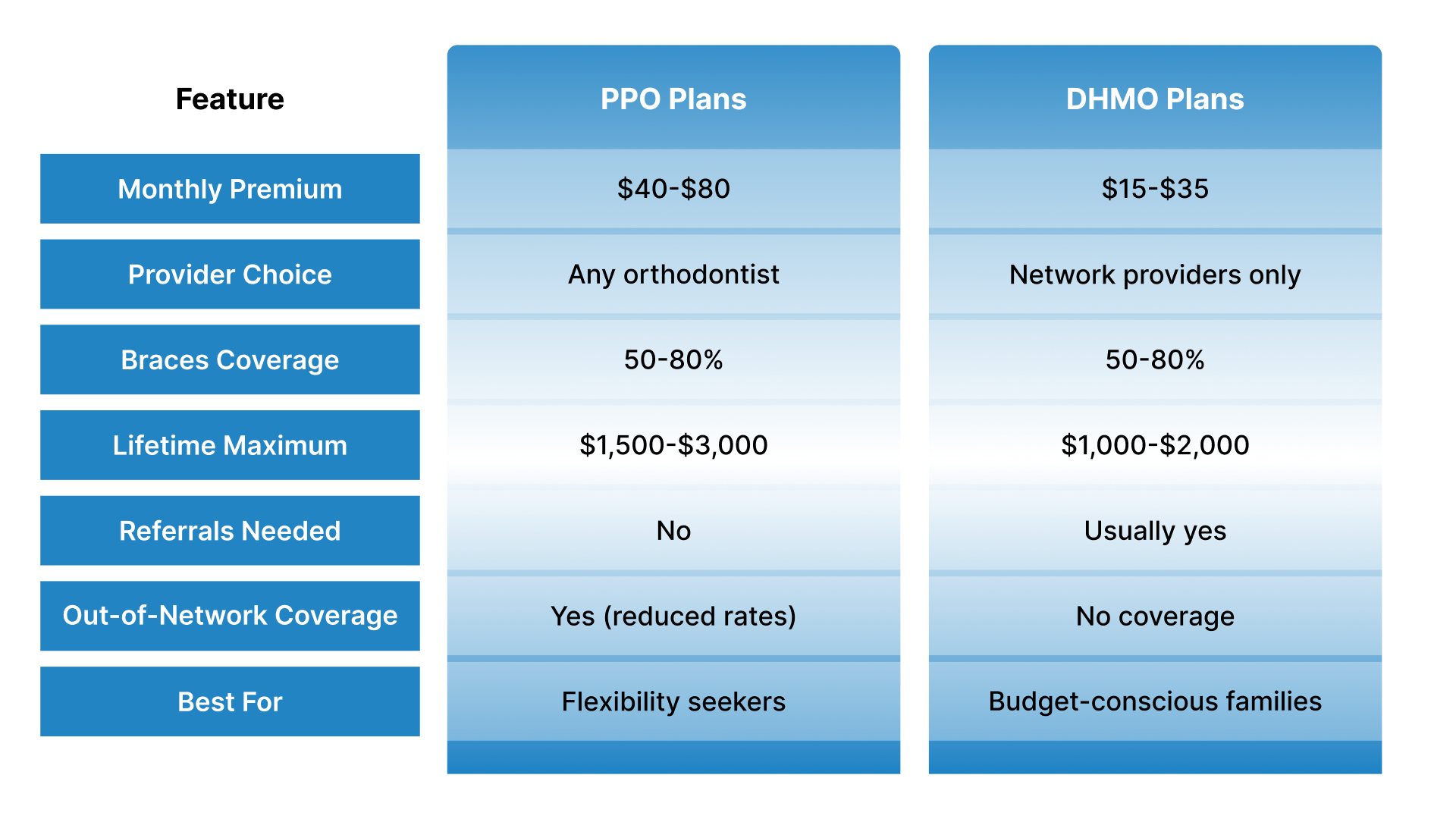
PPO plans give you the freedom to visit any licensed orthodontist without referrals or network restrictions. You'll pay higher premiums, but coverage for braces typically reaches 50-80% after meeting your deductible.
These plans work best if you've already found an orthodontist you trust or want flexibility to seek second opinions. Out-of-network providers are covered, too, though reimbursement rates drop to around 40-60%.
Lifetime orthodontic maximums on PPO plans generally range from $1,500 to $3,000, giving you more financial breathing room for comprehensive treatment.
DHMO (Dental Health Maintenance Organization) Plans:
DHMO plans require you to choose from a network of approved orthodontists and stick with that provider throughout treatment. Monthly premiums run significantly lower than PPOs, sometimes half the cost, but your provider choices become limited.
Coverage percentages for braces often match PPO rates at 50-80%, though lifetime maximums tend to cap lower at $1,000 to $2,000.
These plans make sense if you're comfortable with network restrictions and prioritize affordability over flexibility. Referrals from your primary dentist may be required before starting orthodontic work.
PPO vs. DHMO: Quick Comparison
TrueCost Group connects you with top-tier PPO dental plans, such as HealthSpring and UHOne, that offer up to $5,000 in annual coverage with zero waiting periods for major procedures. We guide you through enrollment via messaging apps so you can access care immediately without complicated paperwork.
Our month-to-month plans give you access to over 85,000 dentists nationwide while keeping your costs predictable and your options flexible.
Find coverage that protects you from day one. Connect with our team today and get personalized plan recommendations in minutes.
How to Find Dental Insurance for Braces?
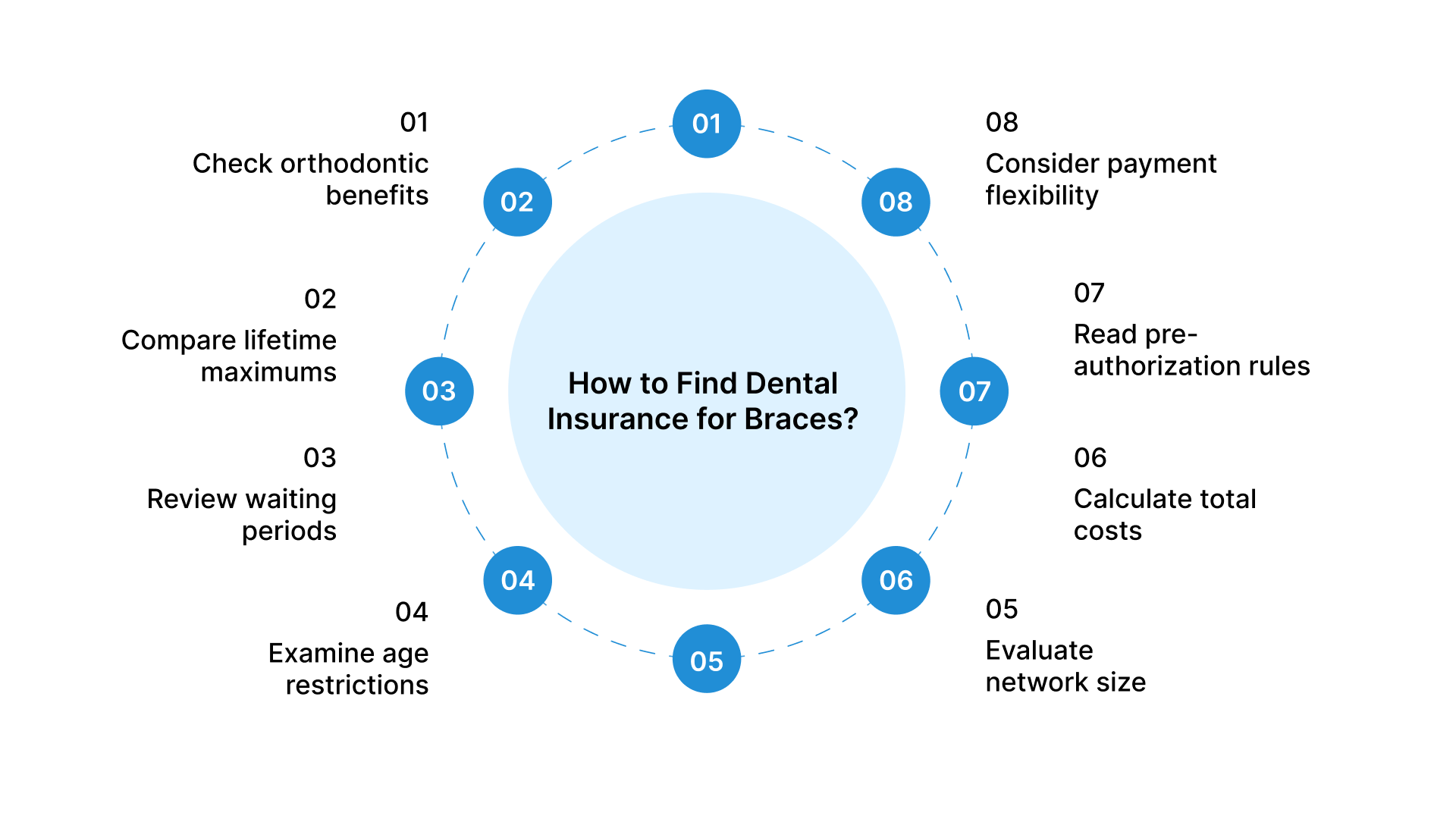
Finding the right dental insurance for braces requires comparing plans based on coverage limits, waiting periods, and network access. Start your search by identifying what matters most: immediate coverage or lower monthly premiums.
Steps to find the best braces coverage:
Check orthodontic benefits: Verify that the plan explicitly includes orthodontic coverage, not just general dental care.
Compare lifetime maximums: Look for plans offering at least $1,500-$3,000 in lifetime orthodontic benefits to cover a significant portion of treatment.
Review waiting periods: Prioritize plans with no waiting periods or short waits (3-6 months) if you need braces soon.
Examine age restrictions: Confirm whether the plan covers adults or limits orthodontic benefits to children under 18.
Evaluate network size: Choose plans with large provider networks so you can find an experienced orthodontist near you.
Calculate total costs: Add up premiums, deductibles, and out-of-pocket maximums to understand your true annual expense.
Read pre-authorization rules: Understand what documentation your insurer requires before approving orthodontic treatment.
Consider payment flexibility: Some plans allow monthly payments for orthodontic work rather than upfront lump sums.
Cost of Braces in the U.S. Without Dental Insurance
According to Oral-B, braces costs vary widely depending on the type of treatment you choose and the complexity of your case. Without insurance, families can expect to pay anywhere from $3,000 to $10,000 for complete orthodontic treatment.
Average costs by brace type:
Metal braces (traditional): $3,000-$7,000 for standard treatment with metal brackets and wires
Ceramic braces: $4,000-$8,000 for tooth-colored brackets that blend with your natural smile
Lingual braces: $8,000-$10,000 for brackets placed behind teeth for invisible treatment from the front
Invisalign: $4,000-$7,400 for clear aligner trays that gradually straighten teeth without metal hardware
Geographic location, orthodontist experience, and treatment duration all influence final costs. Urban areas typically charge more than rural practices. Complex cases requiring longer treatment times or additional appliances push costs toward the higher end of each range.
Does FSA or HSA Cover Braces?
Yes, both FSA (Flexible Spending Account) and HSA (Health Savings Account) funds can cover braces when the treatment is deemed medically necessary.
You can use pre-tax dollars from these accounts to pay for orthodontic expenses, including consultation fees, brackets, wires, retainers, and adjustment appointments.
This tax advantage effectively reduces your overall tax cost by 20-30%, depending on your tax bracket.
Tips to optimize dental insurance for orthodontic care:
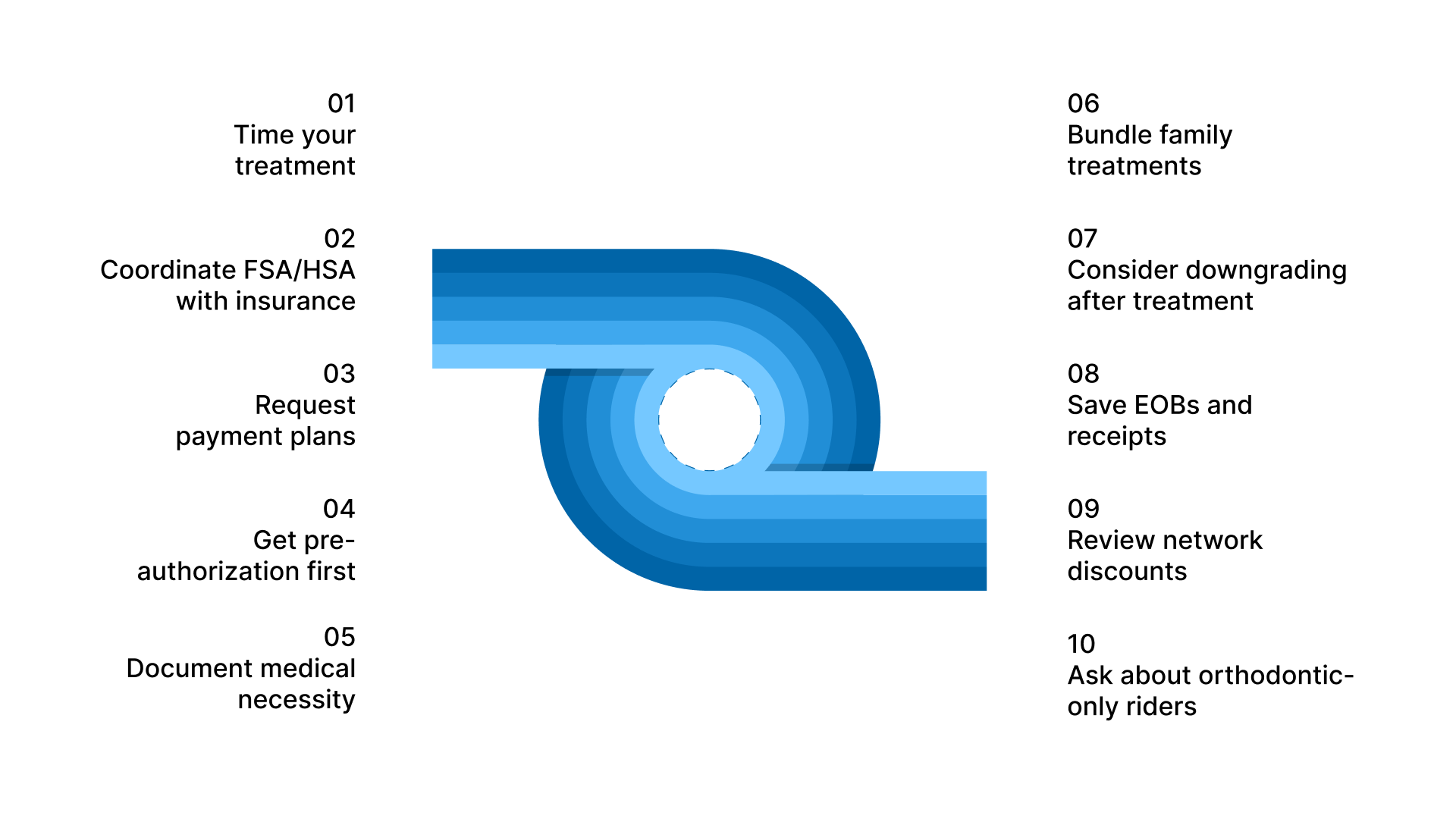
Time your treatment: Begin orthodontic work early in your plan year to maximize benefits across multiple calendar years and increase total coverage.
Coordinate FSA/HSA with insurance: Use tax-advantaged accounts to cover deductibles and copays that insurance doesn't reimburse.
Request payment plans: Ask your orthodontist to structure payments so you can spread costs across two benefit years and double your annual maximums.
Get pre-authorization first: Submit treatment plans for approval before starting to avoid surprise denials and ensure you understand covered amounts.
Document medical necessity: Have your orthodontist detail functional issues like bite problems or jaw misalignment to strengthen your coverage case.
Bundle family treatments: If multiple family members need braces, stagger start dates to avoid hitting family maximums in a single year.
Consider downgrading after treatment: Switch to a lower-cost plan once active orthodontic work ends, and you only need retainer checkups.
Save EOBs and receipts: Keep all explanation of benefits statements and payment records for tax deductions if expenses exceed 7.5% of income.
Review network discounts: Even when insurance reaches its maximum, staying in-network may provide discounts on remaining balances.
Ask about orthodontic-only riders: Some insurers offer supplemental orthodontic coverage you can add to basic plans for higher lifetime limits.
How to Find the Right Dental Insurance for Braces?
Finding the right dental insurance for braces means evaluating plans based on your specific treatment timeline and budget constraints. The goal is to match the coverage benefits with your orthodontic needs while minimizing out-of-pocket expenses.
Key factors to evaluate when choosing braces coverage:
Orthodontic lifetime maximum: Look for plans offering $2,000-$3,000 in lifetime benefits to cover a substantial portion of treatment costs.
Waiting period length: Prioritize plans with zero to six-month waiting periods if you need braces within the next year.
Age eligibility requirements: Confirm that the plan covers your age group, as many policies restrict adult orthodontic benefits or exclude them entirely.
Network provider availability: Verify that quality orthodontists in your area accept the plan and have availability for new patients.
Percentage of coverage: Compare how much each plan reimburses, with 50-80% being standard for orthodontic work after deductibles.
Annual vs. lifetime limits: Understand whether the plan caps benefits per year or provides one lifetime maximum for all orthodontic care.
Premium affordability: Balance monthly costs against coverage benefits to ensure the plan saves you money over paying out-of-pocket.
Pre-authorization process: Research how quickly insurers approve treatment plans and what documentation orthodontists must submit.
Dependent coverage terms: Check if your children remain covered through age 18 or if coverage ends earlier based on policy terms.
Retainers and follow-up coverage: Confirm whether post-treatment retainers and adjustment visits count toward your orthodontic maximum.
Overwhelmed by comparing dozens of plan details and fine print across multiple insurers? TrueCost Group simplifies the process by connecting you with high-limit PPO plans through quick conversations on WhatsApp or Messenger.
Get expert guidance on braces coverage in minutes. Contact us today, and we'll match you with a plan that fits your treatment timeline and budget.
How TrueCost Group Can Help You With the Cost of Braces?
TrueCost Group specializes in connecting families with high-limit dental plans designed to reduce the financial burden of orthodontic care. We eliminate confusion by guiding you to PPO coverage that works from day one, without long forms or frustrating waiting periods.
Why choose TrueCost Group for braces coverage:
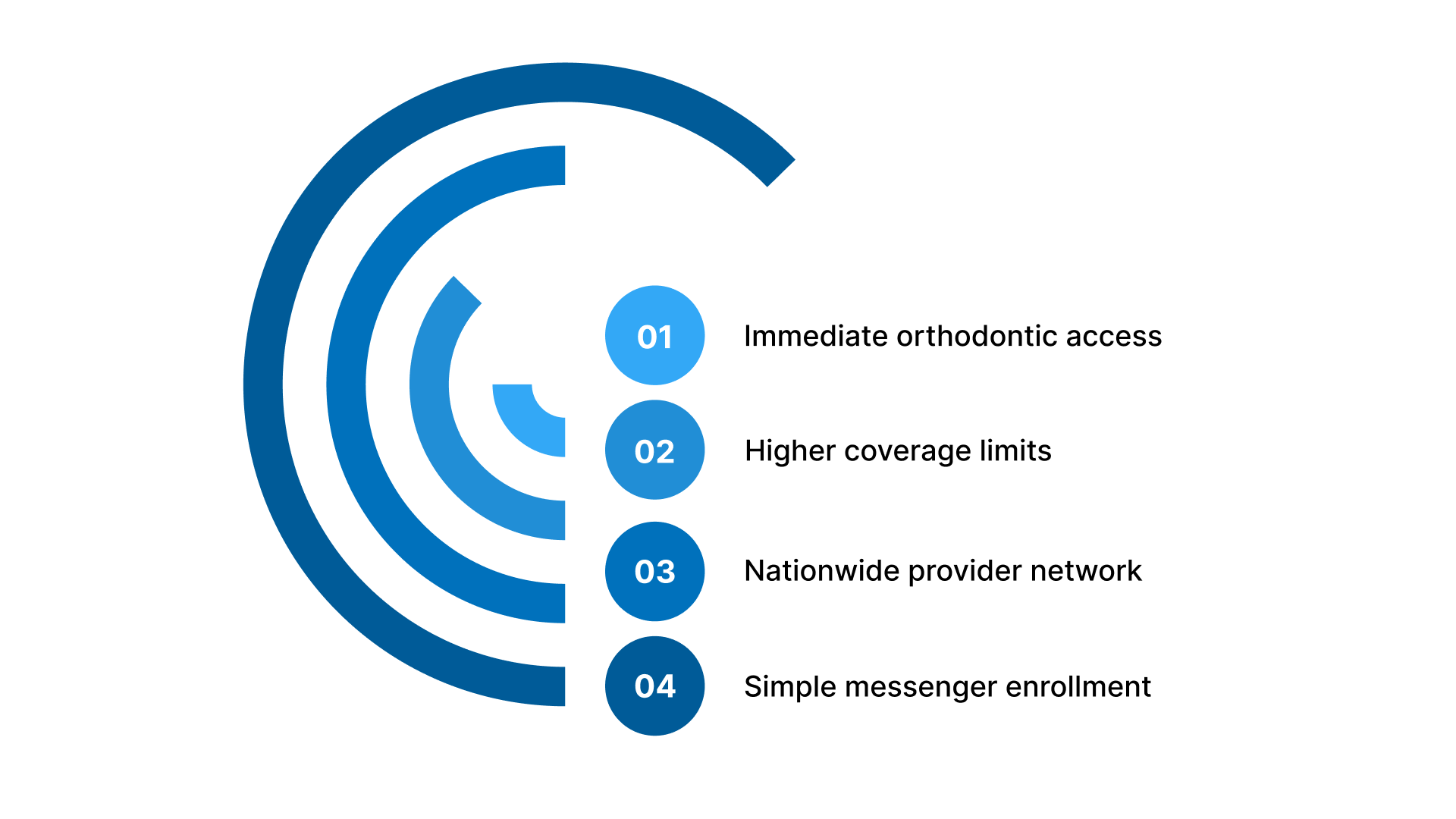
Immediate orthodontic access: Our plans skip the typical six to twelve-month waiting periods, so you can start braces treatment right away without delays.
Higher coverage limits: Access up to $5,000 in annual benefits and $3,000 in lifetime orthodontic maximums, covering significantly more than standard plans.
Nationwide provider network: Choose from over 85,000 dentists and orthodontists who offer deep in-network discounts to lower your total treatment costs.
Simple messenger enrollment: Complete your entire application through WhatsApp or Facebook Messenger in minutes, avoiding complicated paperwork and long phone calls.
Connect with our team now to get a personalized coverage plan that starts protecting you immediately.
Conclusion
Braces coverage through dental insurance is accessible when you understand the plan types, eligibility requirements, and how to maximize your benefits. Children typically receive stronger coverage than adults, but both age groups can significantly reduce treatment costs through PPO or DHMO plans.
The key is matching your orthodontic timeline with a policy that offers immediate coverage, adequate lifetime maximums, and flexible provider networks.
TrueCost Group removes the guesswork by connecting you directly with Healthspring and UhOne PPO plans that deliver up to $5,000 in annual coverage with zero waiting periods.
We handle enrollment through simple messaging conversations, so you skip the paperwork and start saving on braces immediately.
Reach out to us today to discover how much you can save on orthodontic care.
Frequently Asked Questions
Q: Can dental insurance cover braces for cosmetic reasons?
A: No, most dental insurance only covers braces when they address medical necessity, like severe misalignment, bite problems, or jaw issues documented by your orthodontist.
Q: How much do braces cost with insurance coverage?
A: With insurance covering 50-80%, you'll typically pay $600-$3,500 out-of-pocket depending on braces type, your plan's lifetime maximum, and treatment complexity.
Q: Can I get braces coverage without waiting periods?
A: Yes, some PPO plans like those through TrueCost Group offer immediate orthodontic coverage with zero waiting periods for braces and major dental procedures.
Q: Does insurance cover Invisalign the same as traditional braces?
A: Most plans cover Invisalign identically to traditional braces at 50-80% when medically necessary, though some policies exclude clear aligners entirely.
Q: Can both parents' insurance cover one child's braces?
A: Yes, coordination of benefits allows you to use both parents' plans, potentially covering up to 100% of costs by combining their lifetime maximums.